
Preparing Your Pre-Roll Before Lighting
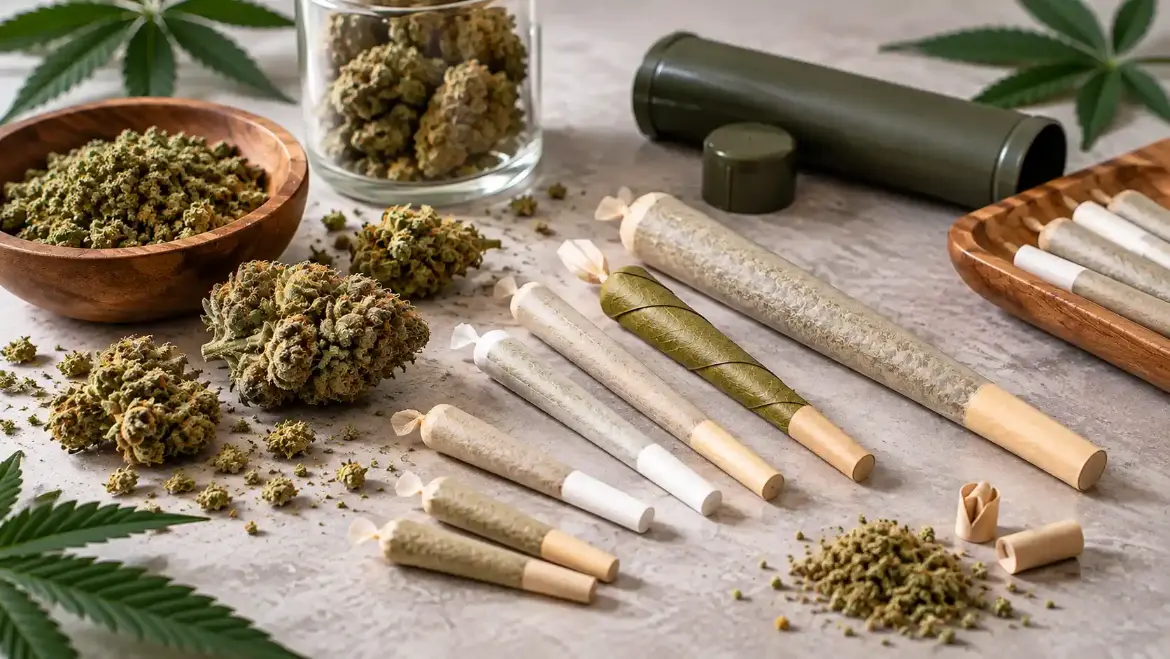
Before lighting a pre-roll, examine its wrapper, filling, and filter tip. Most cannabis pre-rolls contain ground flower enclosed in rolling paper, with a cardboard crutch at one end. The opposite end contains the material intended for lighting. However, the exact construction can vary depending on the product and manufacturer.
Pre-roll construction can also affect how evenly the material burns. For instance, inconsistent packing may create gaps or restrict airflow through the paper. Additionally, damaged wrappers and excessive moisture can interfere with ignition. Checking these characteristics helps identify possible problems before lighting.
The importance of understanding combustion also extends to smoke exposure. In a 2008 study published in Chemical Research in Toxicology, researchers compared emissions from marijuana and tobacco cigarettes under controlled smoking conditions. They found similarities in the chemical composition of both types of smoke, including several harmful compounds. However, the findings concern smoke chemistry rather than the effectiveness of any specific pre-roll lighting technique.
Check the Pre-Roll's Physical Condition
A pre-roll should have an intact wrapper without visible tears, holes, or severely compressed sections. Additionally, the filling should appear reasonably consistent along its length. Some variation is normal because pre-rolls come in different shapes and sizes. However, noticeable gaps or unusually firm areas may indicate uneven packing.
Several physical characteristics are worth checking:
- Rolling paper: Look for tears, loose seams, or damaged edges.
- Cannabis filling: Check for obvious gaps or unusually compressed sections.
- Filter tip: Identify the unlit end and check that the crutch remains secure.
- Twisted paper tip: Determine whether the end contains excess paper or exposed flower.
- Moisture: Look for unusual dampness, excessive dryness, or other signs of deterioration.
These checks help identify possible construction issues before ignition. However, appearance alone cannot establish the chemical quality or safety of a cannabis product.
Understand How Packing Affects Airflow
Packing density affects how air passes through a pre-rolled joint. Excessively compacted cannabis can restrict airflow, while loose filling may create gaps that contribute to uneven burning. Additionally, cone-shaped and straight pre-rolls can distribute their filling differently. However, neither shape guarantees better performance because construction and material condition also influence combustion.
For a more detailed explanation of these differences, our guide to cannabis pre-roll types, sizes, and construction covers how ready-made joints are assembled.
Choosing the Right Lighter and Accessories
Pre-roll lighting involves a source of heat, combustible material, and sufficient oxygen. Although different lighting accessories can ignite rolling paper and cannabis flower, they produce different flame characteristics. Some create a gentle flame, while others concentrate heat into a smaller area. Consequently, flame intensity and control can influence the initial ignition.
Common lighting accessories include:
| Lighting Accessory | Characteristics | Important Considerations |
|---|---|---|
| Standard butane lighter | Produces a conventional soft flame | Direct exposure can scorch the paper |
| Hemp wick | Uses combustible hemp twine, commonly coated in beeswax | Requires a separate ignition source |
| Matches | Produce a temporary flame | Initial combustion may produce a noticeable odor |
| Torch lighter | Produces a concentrated, high-intensity flame | Excessive heat can damage the wrapper |
| Fire-resistant ashtray | Holds ash and extinguished material | Helps contain hot embers during disposal |
The most important consideration is how the flame interacts with the rolling paper and exposed cannabis material. Excessive heat can damage the wrapper, while uneven heat distribution may contribute to irregular ignition. Therefore, the lighting source should be considered alongside the pre-roll's construction and physical condition.
Regardless of the accessory used, combustion produces smoke containing harmful substances. Additionally, a stable, fire-resistant ashtray helps contain hot ash and remaining material. Keep flammable objects away from the lighting area and ensure smoking materials are fully extinguished after use. These precautions apply to all lighting methods.
For adults comparing cannabis accessories, understanding their features can help identify differences in design and function. At Levels Cannabis, you can browse our accessories for available options and product details. Additionally, our cannabis product categories provide a broader overview of the products available at our locations.
Step-by-Step Guide to Lighting a Pre-Roll
The proper way to light a pre roll involves controlling how heat reaches the exposed cannabis material. Rather than relying on intense heat, conventional lighting techniques focus on establishing an even ember. The following five steps explain the process, including flame placement, tip preparation, and burn consistency. They also clarify how airflow can affect the burning material.
Step 1: Position the Pre-Roll and Flame
A conventional pre-roll has a mouthpiece or filter at one end and an exposed cannabis tip at the other. The exposed end serves as the ignition point, while the filter remains unlit. On cone-shaped products, the wider end typically contains the material intended for lighting. However, some specialty pre-rolls may have different designs.
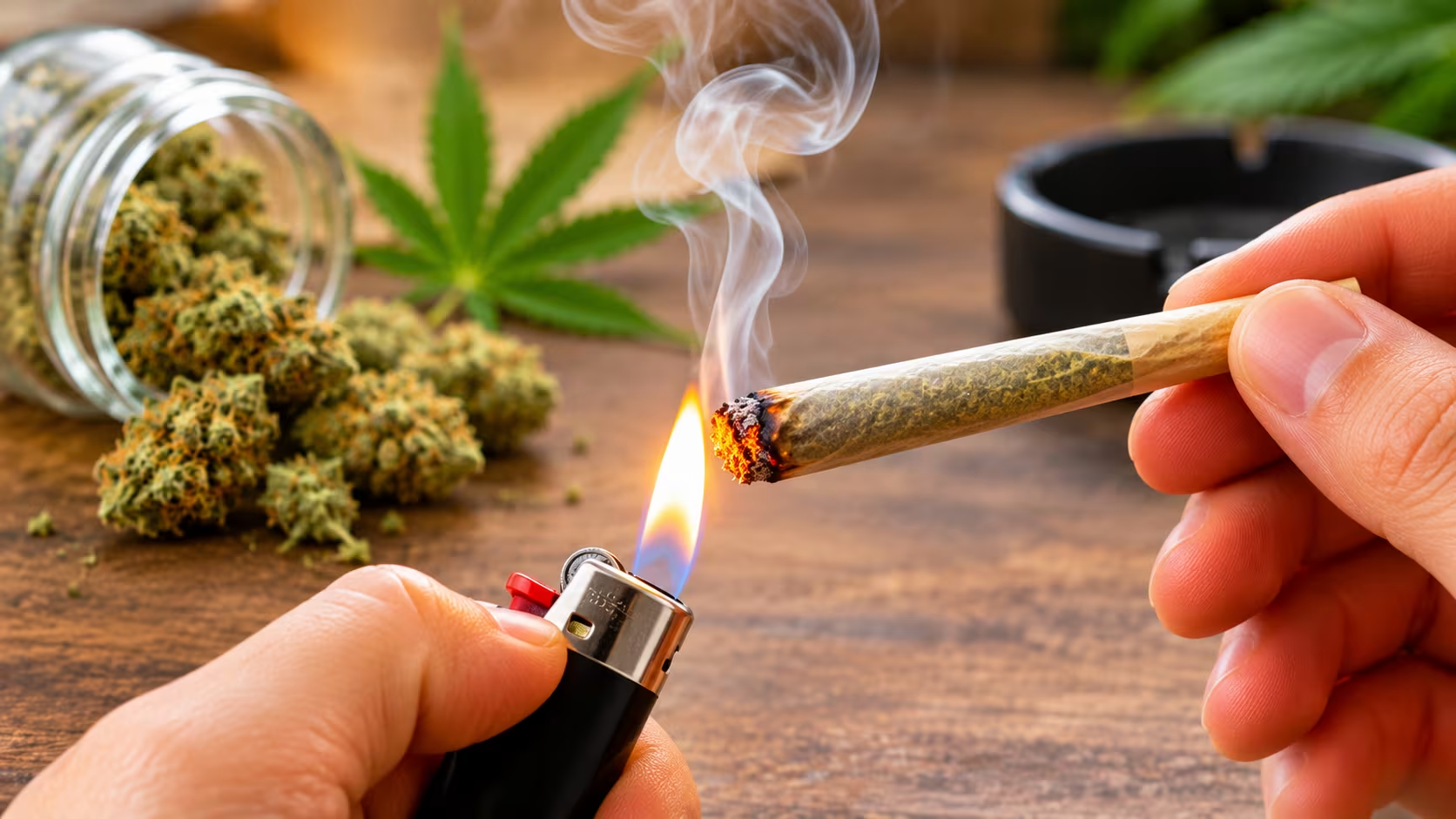
Flame placement affects which parts of the paper and filling receive heat first. Applying concentrated heat to one side may cause the wrapper to ignite unevenly. Additionally, excessive flame exposure can damage thin rolling paper. Therefore, controlled heat distribution is an important part of the initial lighting process.
Step 2: Gently Toast the Tip
Toasting refers to gradually heating the exposed end of a pre-roll before a steady ember forms. As the paper and cannabis material receive heat, the tip may darken or begin to glow. This initial stage helps establish ignition across the exposed material. However, the results depend on the wrapper and the condition of the filling.
Excessive flame exposure can scorch the paper before the surrounding cannabis ignites evenly. As a result, one section may begin burning faster than another. Controlled heating helps explain the importance of the initial lighting technique. However, it cannot guarantee consistent burning when the pre-roll has construction problems.
Step 3: Rotate for an Even Burn
Rotating the pre-roll changes which part of its tip faces the flame. This movement can help distribute heat around the exposed paper and cannabis material. As more of the tip ignites, a relatively even ember may begin forming. However, holding one side near the flame for too long can create uneven ignition.
This difference matters because combustion may advance faster through sections that ignite first. Consequently, one side can develop a longer burn line than the other. Rotation helps explain how heat distribution affects the initial burn. Still, the final result depends on the pre-roll's overall construction.
Step 4: Check for a Consistent Ember
The glowing ember at the burning end of a pre-roll is commonly called the cherry. It forms when the ignited material continues burning after the external flame disappears. A consistent cherry generally extends across the exposed tip rather than advancing along one side. Its appearance can therefore provide a visible indication of how evenly ignition has developed.
An irregular ember may indicate that one section is burning faster than the surrounding material. Additionally, the burn line may begin extending farther down one side. These signs can appear before canoeing becomes more noticeable. However, ember appearance alone cannot establish the overall quality of a cannabis product.
Step 5: Establish a Steady Burn
Once the tip ignites, airflow influences how combustion continues through the pre-roll. Oxygen supports the burning material, while changes in air movement can affect the ember's temperature. Consequently, strong airflow may increase the rate of combustion or contribute to uneven burning. This explains why forceful inhalation can affect an established ember.
Some traditional lighting methods involve drawing air through the pre-roll during ignition. However, inhalation is not necessary to understand how the material burns. Additionally, deeper draws and prolonged breath-holding increase exposure to cannabis smoke without making the lighting process safer. The main distinction is between maintaining combustion and unnecessarily increasing smoke exposure.
Common Pre-Roll Burning Problems and Their Causes
Common pre-roll burning problems include canoeing, repeated extinguishing, rapid combustion, and restricted airflow. Although these issues may seem similar, they can develop for different reasons. Some involve the initial ignition, while others relate to the wrapper or filling. Identifying the specific problem makes it easier to understand what may be affecting the burn.
The following sections explain the signs and likely causes of each issue. They also distinguish temporary ignition problems from more persistent construction defects.
Uneven Burning or Canoeing
Pre-roll canoeing happens when one side burns faster than the opposite side. As combustion continues, the faster-burning section creates an uneven burn line along the wrapper. This can leave unburned cannabis material behind while the other side advances. Canoeing may begin during ignition or develop later because of airflow and construction differences.
Several factors can contribute to canoeing:
- Uneven ignition across the exposed tip.
- Gaps or irregular packing inside the wrapper.
- Damaged paper or inconsistent thickness.
- Strong airflow affecting one section.
- Wind changing how the exposed material burns.
A minor difference in the burn line does not always indicate a serious problem. However, repeated canoeing may suggest that the filling or wrapper has an underlying defect. If the paper tears or becomes unstable, additional heating can worsen the damage. Therefore, identifying visible construction issues is more useful than assuming every uneven burn has the same cause.
Pre-Roll Keeps Going Out
A pre-roll that repeatedly goes out may have restricted airflow, excessive moisture, or tightly packed filling. These conditions can prevent the burning material from receiving enough oxygen or maintaining sufficient heat. Additionally, uneven moisture distribution may cause some sections to extinguish faster than others. As a result, the pre-roll may struggle to maintain a consistent ember.
Repeated extinguishing does not always indicate a defective product. However, unusually damp material, visible damage, or persistent airflow restrictions may point to construction or storage problems. If the product shows signs of contamination or has an unusual odor, avoid using it. A damaged pre-roll should not be treated as something that must be relit.
Pre-Roll Burns Too Quickly
Rapid burning can result from loose packing, dry material, or increased airflow. When a pre-roll contains substantial gaps, oxygen may reach the combustible material unevenly. Consequently, certain areas may ignite and progress faster than expected. Thin or damaged sections of rolling paper can also influence the burn.
However, pre-roll size alone does not determine combustion speed. A smaller pre-roll may contain a different quantity and distribution of material. Likewise, two similarly sized products can behave differently because their construction varies.
Unusually fast burning should be considered alongside the product's physical condition. If visible gaps, tears, or irregular filling are present, those characteristics may help explain the problem. A fast burn does not automatically mean the cannabis contains fewer cannabinoids or has lower quality.
Restricted Airflow or Difficult Draws
Restricted airflow refers to increased resistance when air moves through a pre-roll. This can happen when ground cannabis is packed too tightly or when the filter becomes obstructed. Additionally, compacted material near the crutch can narrow the available passage. These conditions may make the product difficult to draw through.
A clogged pre-roll can also develop from material shifting inside the paper. In infused products, sticky concentrate ingredients may contribute to resistance depending on their placement. However, not every difficult draw comes from the same cause.
Physical inspection can sometimes reveal a damaged filter or unusually compressed section. Still, aggressive squeezing or puncturing can tear the wrapper and create additional problems. A visibly damaged or obstructed product should not be treated as something that must be used.
If you're still unsure about pre-roll construction or recurring burning problems, additional product information can help. For further clarification, you can connect with a knowledgeable Levels Cannabis budtender to better understand pre-roll characteristics, product differences, and available options.
Lighting Regular vs. Infused Pre-Rolls
Regular cannabis pre-rolls generally contain ground flower enclosed in rolling paper. Meanwhile, infused pre-rolls combine flower with additional concentrates, such as kief, hash, or cannabis oil. These added ingredients can change the product's texture, density, and overall composition. Consequently, infused products may exhibit different burning characteristics from flower-only pre-rolls.
The placement of concentrates can also influence combustion. For instance, some infused pre-rolls contain concentrates mixed throughout the flower, while others feature external coatings. Sticky or unevenly distributed ingredients may affect airflow and how the material burns. However, these differences depend on the specific formulation rather than the infused label alone.
Although both formats involve igniting combustible cannabis material, their construction may produce different results. Additionally, infused pre-rolls can contain higher THC concentrations depending on their ingredients. Therefore, product labels and available testing details provide more useful information than appearance alone.
The differences between traditional and concentrate-infused products extend beyond their burning characteristics. For example, our guide explaining what an infused pre-roll is covers the concentrates, ingredients, and formulations used in these products.
Properly Extinguishing and Relighting a Pre-Roll
A pre-roll remains a fire hazard until its burning tip is completely extinguished. Even a small ember can ignite nearby paper, fabric, or other combustible materials. Therefore, a stable, fire-resistant ashtray provides an appropriate place for extinguishing smoking materials. The surrounding area should also remain clear of flammable objects.
The U.S. Fire Administration recommends fully extinguishing smoking materials before disposal. Its guidance emphasizes using stable ashtrays and checking for remaining heat or embers. Additionally, ashes and discarded smoking materials should never enter ordinary trash while hot.
Important fire-safety precautions include:
- Use a stable, fire-resistant ashtray.
- Keep burning materials away from fabrics and paper.
- Confirm that no glowing ember remains.
- Allow hot material to cool completely.
- Keep cannabis remnants away from children and pets.
What Happens When a Pre-Roll Is Relit?
A partially smoked pre-roll differs from a new one because some material has already undergone combustion. The remaining tip may contain ash, charred paper, and partially burned flower. Additionally, previous heat exposure can weaken the wrapper or change the material's physical condition. These changes may affect combustion if the remaining portion is relit.
Loose ash and damaged paper can also contribute to irregular burning. However, the condition of the remaining material varies according to the original construction and storage environment. A pre-roll with visible damage, contamination, or unusual moisture should not be reused. Any material kept for later must first be fully extinguished, cooled, and securely stored.
The Bottom Line: Getting an Even Pre-Roll Burn
Understanding how to light a pre roll involves recognizing how heat, airflow, and product construction influence combustion. Gradual ignition and even heat distribution can help establish a more consistent burn. However, damaged paper, inconsistent packing, or excessive moisture may still cause problems. These factors explain why lighting technique alone cannot guarantee uniform results.
Proper pre-roll handling also involves recognizing possible safety concerns. Cannabis smoke contains harmful substances, and no lighting technique removes those risks. Additionally, Michigan law generally limits adult-use cannabis to individuals aged 21 and older and restricts public consumption. Driving while impaired by cannabis is also prohibited.
For adults comparing pre-roll products, details about construction, ingredients, and cannabinoid content provide useful context. At Levels Cannabis, we offer information about different cannabis formats and their product characteristics. Since selections vary by location, individual store menus provide the most relevant information about available options. For additional product details and local availability, find a Levels Cannabis dispensary near you.
Frequently Asked Questions (FAQs)
Is a Regular Lighter Suitable for Pre-Rolls?
Yes, a standard lighter can ignite the combustible material in a cannabis pre-roll. However, flame intensity and placement influence how the paper and filling initially burn. Excessive heat can damage the wrapper or create uneven ignition. Importantly, using a particular lighter does not eliminate the respiratory risks of cannabis smoke.
Does the Twisted Paper Tip Need to Be Removed?
Not necessarily, because pre-roll manufacturers use different methods to finish the exposed end. Some products feature twisted paper, while others contain a flat or open tip. The correct handling depends on the product's construction and any manufacturer instructions. Avoid tearing the wrapper or disturbing the filling unnecessarily.
Can Wind Affect How a Pre-Roll Burns?
Yes, wind can influence combustion by changing the airflow around the burning material. Strong or uneven air movement may cause one section to burn faster than another. Additionally, wind can carry hot ash or small burning particles toward nearby objects. These conditions create both combustion inconsistencies and potential fire hazards.
Does Pre-Roll Freshness Affect Lighting?
Yes, the condition of the cannabis material can influence ignition and burning behavior. Excessive moisture may interfere with combustion, while unusually dry material can burn differently. However, freshness cannot be determined by lighting performance alone. Properly sealed packaging and appropriate storage conditions help protect a pre-roll from environmental changes.
Does Rolling Paper Thickness Affect How a Pre-Roll Burns?
Yes, rolling paper thickness can influence how heat moves through the wrapper during combustion. However, paper composition, moisture, and the condition of the filling also affect burning behavior. Thinner paper does not automatically guarantee a slower or more even burn. Therefore, paper thickness should be considered alongside the pre-roll's overall construction.
References:
1. Centers for Disease Control and Prevention. (2024, February 15). Cannabis and lung health. https://www.cdc.gov/cannabis/health-effects/lung-health.html
2. Michigan Legislature. (2018). Michigan Regulation and Taxation of Marihuana Act, MCL 333.27954: Scope of act; unauthorized activities with marihuana and marihuana accessories. https://legislature.mi.gov/Laws/MCL?objectName=MCL-333-27954
3. Moir, D., Rickert, W. S., Levasseur, G., Larose, Y., Maertens, R., White, P., & Desjardins, S. (2008). A comparison of mainstream and sidestream marijuana and tobacco cigarette smoke produced under two machine smoking conditions. Chemical Research in Toxicology, 21(2), 494–502. https://pubs.acs.org/doi/10.1021/tx700275p
4. U.S. Fire Administration. (2026, October 2). Smoking fire safety. https://www.usfa.fema.gov/prevention/home-fires/at-risk-audiences/smoking/
5. Kirk, R., & Hickey, D. (2026, November 4). How to light a joint the right way & avoid canoeing. wikiHow. https://www.wikihow.com/Light-a-Joint
6. Levels Cannabis. (2026, September 17). Cannabis pre-rolls explained: What they are, types, sizes & more. https://levelsmi.com/resources/pre-rolls/cannabis-pre-rolls-explained-what-they-are-types-sizes-more