
How do you want to shop?
Cannabis Pre-Rolls Explained: What They Are, Types, Sizes & More

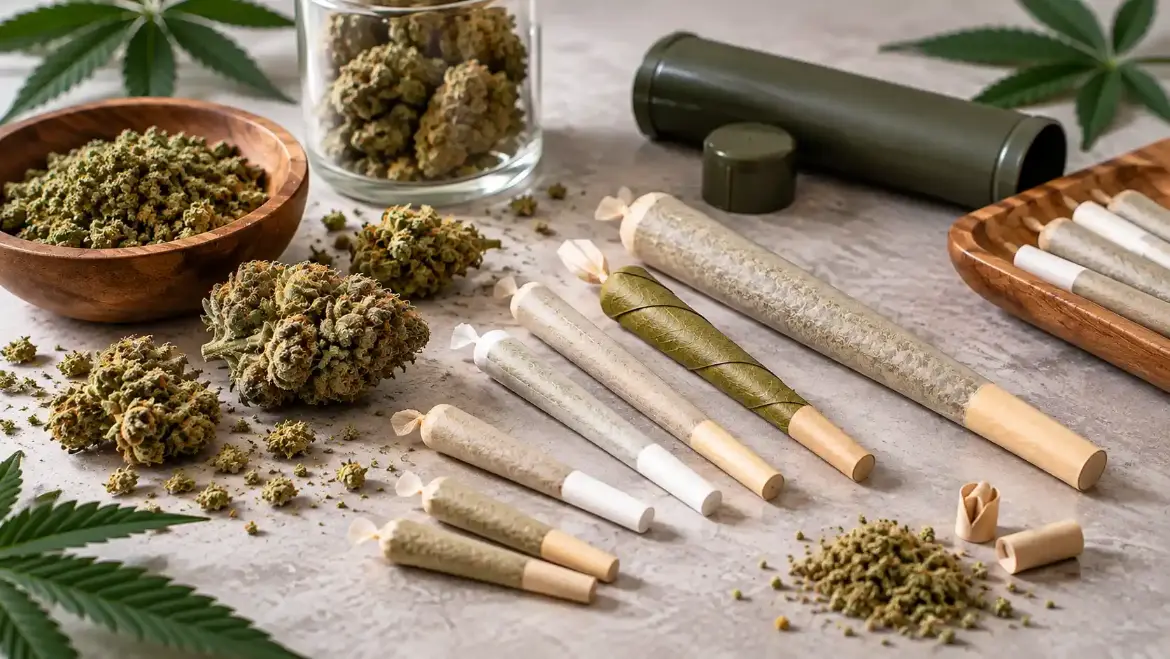
Cannabis pre-rolls are ready-made joints filled with prepared cannabis material. Most contain ground cannabis flower wrapped in rolling paper or placed inside a pre-roll cone. Some products may also contain shake, trim, or added cannabis concentrate.
Unlike a hand-rolled joint, a pre-roll comes already assembled and packaged. They can also vary in size, shape, filling, and product type. That means two pre-rolls can look similar while having different contents.
So, what are cannabis pre-rolls, and what makes one type different from another? This guide breaks down their materials, types, sizes, shapes, packaging, and storage. Keep reading to get a clearer look at how these pre-rolled cannabis products are made and classified.
What Are Cannabis Pre-Rolls Made Of?
At the most basic level, a cannabis pre-roll contains ground cannabis material wrapped in paper. Many also have a filter or crutch at one end. Some use a pre-rolled cone instead of flat rolling paper, while infused products contain an added cannabis concentrate.
The cannabis material is the main component of a pre-roll, while the paper or cone forms its outer structure. A filter or crutch may also be added to support the finished joint. The type of cannabis material can vary from one product to another, which we’ll explore in the next section.
Pre-rolls are also a common product category in regulated cannabis markets. Health Canada’s 2024 Canadian Cannabis Survey found that 65% of people who consumed dried flower or leaf had purchased pre-rolled joints. Among those buyers, 43% had purchased at least some pre-rolls infused with high-potency oils or concentrates. These figures describe Canadian consumers, not the U.S. market.
With that basic structure in mind, let’s look at each component more closely. The cannabis material makes up the filling, while the paper or cone holds everything together. A filter or crutch then completes the basic structure of many pre-rolls.
Cannabis Flower
Cannabis flower is the primary cannabis material used in many pre-roll products. Before it is placed inside the paper or cone, the flower is ground into smaller pieces that can be distributed throughout the pre-roll. The preparation and starting material can vary depending on the product.
Product labels may also provide information about the strain or cultivar, THC and CBD content, other cannabinoids, or terpene profile. The information available depends on the product and its labeling requirements.
Rolling Paper or Pre-Rolled Cone
Rolling paper gives a pre-roll its shape and keeps the cannabis material contained. Some manufacturers shape flat joint paper around the filling. Others use a pre-roll cone that already has its tapered shape before filling.
The paper itself can differ between products. Hemp and rice are examples of materials used for rolling papers and cones. The packaging may identify the paper or cone material when that information is provided.
Filter or Crutch
A filter or crutch sits at one end of many pre-rolls. It helps support the structure and keeps loose cannabis material from moving through the opening. Some products use a paper or fiber filter, while others use a folded cardboard crutch.
The design can vary depending on the product. A simple crutch may use folded paper, while another pre-roll may have a more structured filter. Not every pre-roll has the same type of end piece.
How the Components Are Assembled
Once the cannabis material is prepared, manufacturers measure the amount needed for the product. They place the material into the rolling paper or pre-rolled cone and shape it into the desired form. A filter or crutch may be added before or during this process.
Manufacturers can use specialized equipment for filling and shaping pre-rolls. Some production methods also include manual steps. The exact process depends on the manufacturer and the design of the finished product.
What Types of Cannabis Are Used in Pre-Rolls?
Not all cannabis pre-rolls are made from the same type of flower material. The filling may come from whole flower, shake, or trim, depending on how the cannabis was processed before it was used. These terms describe the source and condition of the cannabis material rather than the shape or size of the finished pre-roll. Understanding the difference can make product labels easier to read.
Whole Flower
Whole flower starts as intact cannabis buds that are processed before being placed into a pre-roll. The buds are ground into smaller pieces so they can be evenly distributed inside the rolling paper or pre-roll cone. This means a whole-flower pre-roll does not contain an entire bud in its original form. Instead, the term refers to the quality and form of the starting cannabis material used to make the product.
Whole-flower pre-rolls may also be labeled with information about the cannabis strain, cannabinoid profile, or terpene profile. The specific information available depends on the product and its packaging. These details can be useful when comparing pre-rolls from popular brands.
Shake
Shake consists of smaller pieces of cannabis flower that separate from larger buds during handling, transportation, or storage. These loose pieces can collect over time and may be used as the filling for some pre-roll products. Shake is still cannabis flower, but it is generally less intact than the buds used as whole-flower material.
The appearance of shake can vary from small flower fragments to finer pieces. Its use in a pre-roll does not automatically tell you the product's strain, cannabinoid content, or other characteristics. Those details depend on the cannabis material used and the information provided on the product label.
Trim
Trim refers to plant material removed from cannabis buds during the trimming process. It can include smaller leaves and other pieces that are separated while harvested cannabis is being prepared. Some manufacturers may use trim in pre-rolls as part of the cannabis material.
Trim and shake are sometimes grouped together, but they describe different things. Shake generally refers to pieces of flower that have broken away from larger buds, while trim comes from material intentionally removed during trimming. As a result, a pre-roll made with trim has a different starting material from one made with whole flower or shake.
Product labels may identify the type of cannabis material used in a pre-roll, although the amount of information provided varies. Checking the packaging can give you more context about what is inside the product. For a broader overview of cannabis flower and how it differs from other cannabis materials, read What Is Cannabis Flower? A Beginner's Guide.
What Are the Different Types of Cannabis Pre-Rolls?
Pre-rolls can differ in more ways than the cannabis material used inside them. Size, format, added ingredients, and the type of cannabis can all create different product categories. Some are straightforward flower pre-rolls, while others may be infused, flavored, or made with more than one cannabis strain.
Here’s a closer look at the common types you may come across:
Regular Pre-Rolls
Regular pre-rolls use the basic pre-rolled joint format without an added concentrate or specialty construction. They may contain ground flower and can vary in weight, cannabis strain, cannabinoid profile, and terpene profile.
Mini Pre-Rolls
Mini pre-rolls are smaller versions of standard pre-rolled joints. They contain less cannabis and are usually shorter or narrower than regular formats. The exact size of a mini pre-roll is not universal. Manufacturers can use different weights and dimensions while still describing the product as a mini or small pre-roll.
Infused Pre-Rolls
Infused pre-rolls contain cannabis flower along with an added concentrate or other cannabis-derived ingredient. The concentrate may be incorporated into the flower, placed inside the pre-roll, or applied to the outside. This gives infused products a different composition from flower-only pre-rolls. The specific ingredients and cannabinoid information should be listed on the product packaging.
For a closer look at how these products are made and what sets them apart, read What Is an Infused Pre-Roll? A Complete Guide to learn more about their ingredients and composition.
Blunt-Style Pre-Rolls
Blunt-style pre-rolls use a wrapper or construction associated with traditional blunts rather than standard joint paper. Depending on the product, the wrapper may be made from hemp or another material.
The term describes the format, not necessarily the presence of tobacco. Checking the product label can tell you what material was used for the wrapper and what cannabis material is inside.
CBD and Hemp Pre-Rolls
CBD and hemp pre-rolls use hemp-derived cannabis material that meets the applicable definition of hemp. Their cannabinoid profiles can vary, so the label is the best source for information about the product's CBD, THC, and other cannabinoid content.
These pre-rolls may look similar to other cannabis joints, but their contents and legal classification can differ. Terms such as CBD, hemp, and THC describe different characteristics and should not be used interchangeably
Sativa, Indica, and Hybrid Pre-Rolls
Pre-rolls may be labeled as sativa, indica, or hybrid based on the classification used for the cannabis flower. These terms are commonly used on cannabis product menus and labels to describe different product categories.
A product may also include a specific strain or cultivar name alongside this classification. Depending on the product, the label may provide additional information about its cannabinoid and terpene profile.
What Sizes Do Cannabis Pre-Rolls Come In?
Cannabis pre-rolls are sold in different weights and formats, so there is no single standard size. Common options include half-gram and one-gram pre-rolls, while some products contain more cannabis. You may also find mini formats or larger multi-gram options, depending on the manufacturer.
The amount of cannabis in a pre-roll is usually listed in grams on the product label. Here are some common weights you may encounter:
Pre-Roll Size | Common Weight |
Mini pre-roll | Varies by product |
Half-gram pre-roll | 0.5g |
Standard pre-roll | 1g |
Large pre-roll | 1.5g or more |
Multi-gram pre-roll | 2g or more |
0.5g Pre-Rolls
A 0.5g pre-roll contains approximately half a gram of cannabis material. This is one of the common smaller sizes found among pre-roll products.
Because manufacturers can use different paper sizes and designs, the physical appearance of a half-gram pre-roll can vary. Some may look longer and thinner, while others may be shorter with a wider shape.
1g Pre-Rolls
A 1g pre-roll contains approximately one gram of cannabis material. It is another common size and may be sold as a single pre-roll or included in a multipack.
The listed weight refers to the cannabis contents rather than the paper, filter, or packaging. Product labels can provide the exact net weight and other product details.
Larger Pre-Rolls
Some pre-rolls contain more than one gram of cannabis. Common examples include 1.5g and 2g formats, although larger multi-gram products are also available.
These products may use a longer cone, wider paper, or a specialty shape to accommodate the additional cannabis material. The exact weight and dimensions depend on the manufacturer.
Multi-Pack Pre-Rolls
Multi-packs contain several pre-rolls in one package. The individual joints may have the same weight, or the package may contain different sizes depending on the product.
For example, a package could contain several 0.5g pre-rolls rather than one larger joint. Always check the package for both the number of pre-rolls and the total net weight, as these figures describe different aspects of the product.
Pre-roll sizes and availability can vary by product and location. If you're comparing current options, you can check Levels’ latest deals for updated offers and available pre-roll products.
What Are the Different Pre-Roll Shapes and Formats?
Pre-rolls can also differ in their shape and construction. The most common formats include cones and straight pre-rolls, while some manufacturers create specialty shapes for specific products. These differences affect how the finished pre-roll looks and how the cannabis material is arranged inside.
Cone Pre-Rolls
Cone pre-rolls have a tapered shape, with the wider end holding more cannabis and the narrower end connecting to the filter or crutch. They are commonly made using pre-rolled cones, which give the product its shape before the cannabis is added.
Because the cone widens toward one end, its dimensions can vary based on the amount of cannabis it is designed to hold. A small cone may be used for a mini pre-roll, while larger cones can accommodate more cannabis.
Straight Pre-Rolls
Straight pre-rolls have a more uniform width from one end to the other. Instead of gradually widening like a cone, the rolling paper forms a relatively consistent tube around the cannabis material.
This format can be made by wrapping rolling paper around ground flower and securing the edges. The final length and diameter depend on the amount of cannabis used and the paper size.
Specialty Pre-Rolls
Some pre-rolls use shapes or constructions that go beyond the standard cone and straight formats. These may include unusual tips, layered designs, or other structural features used to create a distinct product format.
For example, an infused pre-roll may use a cone shape, while a multi-gram pre-roll may use a larger or more elaborate construction.
Pre-Roll vs. Joint: What’s the Difference?
A pre-roll is essentially a ready-made joint, but the main difference is who rolls it. A pre-roll is prepared by a manufacturer or producer before it reaches the consumer, while a traditional joint is usually rolled by hand. Both can contain ground cannabis flower wrapped in rolling paper and may include a filter or crutch.
The term “joint” describes the general format of cannabis rolled in paper, whereas “pre-roll” describes a joint that has already been prepared. In other words, pre-rolls are a type of joint, but not every joint is a pre-roll.
Feature | Pre-Roll | Hand-Rolled Joint |
Preparation | Prepared before purchase | Usually rolled by the consumer |
Cannabis material | Often ground flower, shake, or other material | Depends on what is used |
Paper | Rolling paper or pre-roll cone | Usually rolling paper |
Filter | May include a filter or crutch | Optional |
Packaging | Typically sold in product packaging | Usually made when needed |
How Are Cannabis Pre-Rolls Packaged and Labeled?
Pre-roll packaging does more than keep the product contained. It protects the pre-roll during storage and transport while providing information about what is inside. Depending on the product and market, the package may include the product name, cannabis type, net weight, cannabinoid content, ingredients, and other required details.
Labels can also help distinguish between similar-looking products. For example, two one-gram pre-rolls may have different cannabis material, cannabinoid profiles, or added ingredients.
The label provides product-specific information about what is inside. Depending on the market and product, this may include:
- Net weight: The amount of cannabis product in the package.
- Cannabinoid content: Information about THC, CBD, and other cannabinoids.
- Ingredients: Additional ingredients included in the product, when applicable.
- Strain or cultivar: The cannabis genetics associated with the product.
- Batch or lot information: Details identifying the production batch.
- Packaging or production date: Information about when the product was packaged or produced.
Labeling requirements vary by location, so the information and format can differ between products. If storage instructions or other product-specific details appear on the package, follow those directions.
How Should You Store Cannabis Pre-Rolls?
Proper storage helps protect cannabis pre-rolls from conditions that can affect the flower, paper, and overall condition of the product. The goal is to keep them protected from environmental changes while avoiding unnecessary handling.
For best storage:
- Keep them in a cool place. Avoid areas exposed to high temperatures, such as inside a vehicle or near a heat source.
- Limit exposure to light. Store pre-rolls away from direct sunlight, which can affect cannabis products over time.
- Avoid excess moisture. High humidity can affect the cannabis material and rolling paper.
- Keep the original packaging closed. Sealed packaging can help limit exposure to air and surrounding conditions.
- Prevent physical damage. Store pre-rolls where they will not be crushed, bent, or disturbed.
- Follow the product label. If the manufacturer provides specific storage instructions or date information, use those details as your guide.
For multi-packs, keeping the container closed after removing a pre-roll can also help protect the remaining products. Storage conditions may vary by product, so the packaging remains the most relevant source for specific instructions.
The Bottom Line: Understanding Cannabis Pre-Rolls
Cannabis pre-rolls cover a wide range of products, from simple flower-filled joints to different sizes, shapes, and specialty formats. The terms used on the packaging can tell you more about what makes one product different from another.
When reading a pre-roll label, focus on the information that identifies the product itself, including its weight, ingredients, cannabinoid content, and other required details. With these basics in mind, the different names and formats used for cannabis pre-rolls become much easier to understand.
If you’re looking for cannabis pre-rolls in Michigan, explore Levels dispensary locations to find a location near you.
Frequently Asked Questions (FAQs)
Can pre-rolls contain more than one cannabis strain?
Yes. Some products may contain cannabis material from multiple strains or cultivars. When this is the case, the product description or label may provide information about the different cannabis genetics included.
Are all pre-rolls made with cannabis flower?
No. While many pre-rolls use ground cannabis flower, some products can contain other cannabis materials or added ingredients. The product label can provide details about its contents.
Can a pre-roll be sold individually or in a pack?
Yes. Pre-rolls may be sold as a single pre-roll or as part of a multipack. The package should identify the number of pre-rolls and the total net weight.
What does the weight on a pre-roll package mean?
The listed net weight refers to the amount of product contained in the package, rather than the weight of the paper, filter, or outer packaging. For multipacks, check whether the listed weight applies to each pre-roll or the package as a whole.
Do pre-rolls have an expiration date?
Labeling practices vary by product and jurisdiction. Some packaging may include a production, packaging, or expiration-related date, while other products may provide different freshness or storage information.
Can pre-rolls have different paper materials?
Yes. Pre-rolls can use different types of rolling paper or pre-rolled cones, including materials such as hemp or rice. The packaging may identify the paper or cone material when that information is provided.
References:
Cannabis Regulatory Agency. (2022). Michigan Administrative Code R 420.212: Storage of marihuana product. Michigan Department of Licensing and Regulatory Affairs.
https://regulations.justia.com/states/michigan/licensing-and-regulatory-affairs/marijuana-regulatoty-agency/marihuana-operations/section-r-420-212/
Cannabis Regulatory Agency. (2022). Michigan Administrative Code R 420.303a: Producer and sales location packaging and testing requirements. Michigan Department of Licensing and Regulatory Affairs.
https://www.law.cornell.edu/regulations/michigan/Mich-Admin-Code-R-420-303a
Cannabis Regulatory Agency. (2022). Michigan Administrative Code R 420.502: Tracking identification; labeling requirements; general. Michigan Department of Licensing and Regulatory Affairs.
https://www.law.cornell.edu/regulations/michigan/Mich-Admin-Code-R-420-502
Cannabis Regulatory Agency. (2022). Michigan Administrative Code R 420.504: Marihuana product sale or transfer; labeling and packaging requirements. Michigan Department of Licensing and Regulatory Affairs.
https://www.law.cornell.edu/regulations/michigan/Mich-Admin-Code-R-420-504
Jiwa. (2021). Jiwa pre-rolled cones size chart. Jiwa.
https://jiwacones.com/wp-content/uploads/2021/10/JIWA_cones_Size_Chart_v003.pdf
Health Canada. (2024). Canadian Cannabis Survey 2024: Summary. Government of Canada.
https://www.canada.ca/en/health-canada/services/drugs-medication/cannabis/research-data/canadian-cannabis-survey-2024-summary.html
Das, P. C., Vista, A. R., Tabil, L. G., & Baik, O.-D. (2022). Postharvest operations of cannabis and their effect on cannabinoid content: A review. Bioengineering, 9(8), 364.
https://doi.org/10.3390/bioengineering9080364
McClements, D. J., et al. (2024). Elemental composition of commercially available cannabis rolling papers. ACS Omega, 9.
https://doi.org/10.1021/acsomega.3c09580
Zamengo, L., Bettin, C., Badocco, D., Di Marco, V., Miolo, G., & Frison, G. (2019). The role of time and storage conditions on the composition of hashish and marijuana samples: A four-year study. Forensic Science International, 298, 131–137.
https://doi.org/10.1016/j.forsciint.2019.02.058