
How do you want to shop?
How to Store Weed: Best Storage Methods for Freshness

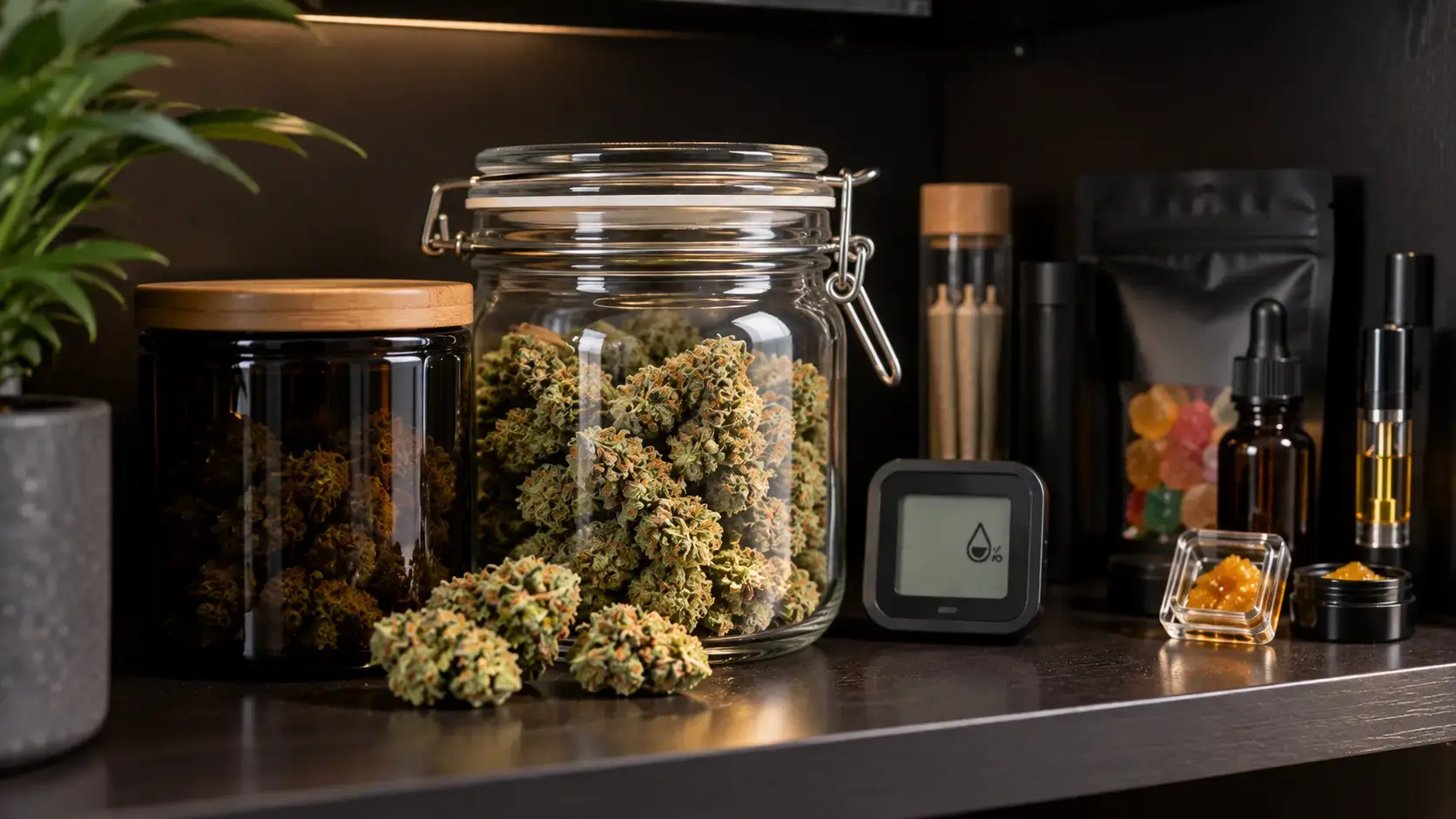
The best way to store weed is to keep it sealed in a suitable container. It should also stay in a cool, dark, and stable place. These conditions help limit exposure to light, heat, oxygen, and excess moisture. Over time, these factors can affect cannabis freshness, aroma, texture, and cannabinoid content.
Storage needs can also vary by cannabis product type. Flower, pre-rolls, concentrates, vapes, edibles, tinctures, and topicals may have different packaging requirements. Always check the product label for specific storage instructions before changing its original packaging.
This guide covers the storage conditions, containers, and handling practices that can help maintain cannabis quality over time.
What Causes Cannabis to Lose Freshness?
Cannabis can change as it sits in storage, especially when exposed to unfavorable conditions. Light, temperature, air, humidity, and time can all affect the condition of stored cannabis.
A four-year study examined cannabis samples stored under different conditions, including room temperature with light exposure, room temperature in darkness, refrigeration, and freezing. The researchers found significant changes in THC and CBN in samples stored at room temperature. Light and temperature also affected the rate and pattern of these changes.
Several factors can contribute to the loss of cannabis freshness.
Light Exposure
Light can contribute to chemical changes in cannabis during storage. Light exposure can affect cannabinoid stability, especially when combined with warmer storage conditions. Prolonged exposure can also affect other compounds found in cannabis.
Direct sunlight is therefore not ideal for stored cannabis. Sunlight can expose the product to both light and heat at the same time. Keeping cannabis away from windows and other bright areas can help limit unnecessary exposure.
Heat and Temperature Changes
Temperature can affect how quickly cannabis compounds change during storage. A study examining dried cannabis flower found that cannabinoid degradation varied across temperatures from -20°C to 40°C. The researchers used these results to model how temperature affects cannabinoid stability over time.
Frequent temperature changes can also create another storage concern. Moving a cold container into a warmer environment may lead to condensation. For that reason, a stable storage environment is preferable to repeated shifts between hot and cold conditions.
Air and Oxygen Exposure
Oxygen exposure can contribute to chemical changes in stored cannabis. Air oxidation can cause measurable cannabinoid losses, while limiting air exposure can help reduce these changes.
This is one reason airtight storage is commonly used for cannabis flower. A sealed container limits the exchange of air with the surrounding environment. However, repeatedly opening the container can still introduce fresh air, so unnecessary opening should be avoided.
Improper Moisture Levels
Moisture also plays an important role in cannabis storage. Too little moisture can leave flower excessively dry and affect its texture. Too much moisture can create an environment where mold may develop.
Relative humidity and water loss can affect the condition of stored cannabis. The goal is therefore to maintain a stable moisture level rather than allowing the product to become extremely dry or damp.
What Are the Best Conditions for Storing Cannabis?
For cannabis flower, maintaining a moderate and stable relative humidity can help manage moisture during storage. Research on dried cannabis has examined storage conditions around 45–55% relative humidity, while other controlled studies have used conditions around 60% humidity.
The goal is to avoid both excessive dryness and excess moisture. Too little moisture can cause flower to become overly dry, while higher moisture levels can increase conditions associated with microbial growth.
When storing cannabis at home, focus on these conditions:
- Cool temperature: Keep cannabis away from heat sources and areas that become hot throughout the day.
- Stable humidity: Avoid environments that are very damp or extremely dry. A consistent humidity level is preferable to frequent changes.
- Limited light: Store cannabis away from direct sunlight and strong light sources.
- Limited air exposure: Keep the product in a properly sealed container when possible.
- Stable location: Choose a dry location that does not experience frequent temperature or humidity changes.
There is no universal storage setting for every cannabis product. Recommended conditions can vary by product and packaging. Health Canada, for example, requires cannabis labels to provide recommended storage conditions when applicable, including information about temperature, light, or humidity.
For that reason, check the product label before changing its storage conditions. This is especially important for products that have specific temperature or packaging requirements.
What Is the Best Container for Storing Weed?
The right container should help limit exposure to air, moisture, and light while keeping cannabis protected from unnecessary handling. For flower, an airtight glass container is a practical option because glass is nonporous and can provide a secure barrier.
Container size, seal quality, and light protection also matter. Choose a container that fits the amount of flower being stored without leaving excessive empty space or compressing the contents.
Airtight Glass Containers
Choose a glass container with a tight-fitting lid that closes securely without obvious gaps. The goal is to limit unnecessary air exchange and protect the flower from the surrounding environment. Keep the container closed when not in use and store it in a suitable location. A good container cannot compensate for excessive heat, light, or moisture in the storage area.
Choosing the Right Container Size
Choose a container that fits the amount of cannabis you need to store. A container that is much larger than its contents leaves more empty air space inside. A properly sized container can help limit unnecessary air exposure.
At the same time, avoid packing flower tightly into a small container. The contents should fit without being compressed or crushed. If you are storing several amounts separately, using appropriately sized containers can also reduce how often each container needs to be opened.
Secure Seals
A secure seal helps keep the storage environment more consistent. Look for a container with a lid that closes firmly and does not leave obvious gaps. This is especially important for flower because repeated exposure to outside air can contribute to changes over time.
Check the seal if the container becomes damaged or no longer closes properly. Replace containers that have cracked glass, worn seals, or loose-fitting lids.
Glass vs. Plastic
Glass and plastic containers can both be found in cannabis storage. However, they do not have identical properties. Glass is nonporous and provides a stable barrier, while some plastics can be more permeable to gases and may absorb or transfer odors.
For longer-term flower storage, glass is often preferred when an airtight option is available. For other cannabis products, however, the original packaging may be designed specifically for that product. In those cases, follow the manufacturer's storage instructions rather than transferring the product unnecessarily.
Clear vs. Opaque or Tinted Containers
Clear glass makes it easy to see what is inside, but it does not block light. Since prolonged light exposure can contribute to cannabis degradation, clear containers should be kept in a dark location.
Opaque or tinted containers can provide additional protection from light. If you use a clear glass jar, storing it inside a closed cabinet or drawer can provide a simple alternative to replacing the container.
How Should You Store Different Cannabis Products?
Different cannabis products can have different storage needs. Flower is more sensitive to changes in moisture, while concentrates, vapes, edibles, tinctures, and topicals may have product-specific requirements. The original packaging is usually the best place to start because it may include storage instructions from the manufacturer. If you're comparing products from trusted brands, their packaging and product information can also provide useful storage guidance.
Keep products sealed when they are not being handled, and avoid conditions that expose them to excessive heat, light, or moisture. The right approach also depends on the product's formulation and packaging.
Cannabis Product | Storage Priority | Quick Tip |
Flower | Control moisture and limit exposure | Keep sealed and protected from heat and light. |
Pre-Rolls | Protect from moisture and damage | Keep in the original packaging when possible. |
Concentrates | Follow product-specific storage guidance | Keep sealed and protect from excessive heat. |
Vapes and Cartridges | Limit heat and sunlight | Keep in the original packaging and avoid hot environments. |
Edibles | Follow the product label | Protect from heat, humidity, and direct sunlight. |
Tinctures | Keep the bottle securely closed | Follow any temperature or light instructions on the label. |
Topicals | Follow product-specific instructions | Keep securely closed and store as directed. |
These are general storage guidelines. The sections below provide more details for storing each cannabis product and explain what to consider based on its packaging and formulation.
Flower
Store cannabis flower in a properly sealed container that limits exposure to air and light. An airtight glass container can be a practical option for home storage. Keep the container in a cool, dark location with stable conditions.
Avoid storing flower near windows, heating appliances, or other areas with frequent temperature changes. Do not leave the container open for extended periods, and follow any storage instructions provided on the product label.
For a closer look at cannabis flower, its characteristics, and what to know before choosing a product, read our guide, What Is Cannabis Flower? A Beginner's Guide.
Pre-Rolls
Pre-rolls are best kept in their original packaging when possible. The packaging can help protect them from environmental exposure and physical damage. Keep the package closed when the pre-rolls are not being handled. Store them somewhere cool and dry, and avoid placing heavy objects on top of the package.
Concentrates
Concentrates can vary in texture and formulation, so their storage requirements may differ. Keep them in their original containers unless the product instructions state otherwise.
Excessive heat can affect the consistency of some concentrates, while direct light can contribute to changes over time. Keep the container sealed and follow any temperature or storage instructions provided on the label.
Vapes and Cartridges
Keep vape cartridges and disposable devices in their original packaging when possible. Store them in a cool, dry place away from direct sunlight and excessive heat. Avoid leaving these products in hot environments, such as inside a vehicle. Do not modify the device or transfer its contents to another container. Always follow the manufacturer's storage instructions for the specific product.
Edibles
Keep edibles sealed in their original packaging and follow the storage directions on the label. Different edible products can respond differently to heat and humidity because their formulations vary.
Heat may affect the texture or physical condition of some edibles. Keep them away from direct sunlight and areas that become hot or humid. If the label provides a specific temperature requirement, follow it.
Tinctures
Store tinctures in their original bottles with the cap securely closed. Avoid leaving the bottle open for extended periods. Follow the storage instructions on the label, particularly if the product specifies temperature or light requirements.
Because tincture storage can vary by product, understanding how these products are formulated can help you follow the right storage practices. Read our guide, What Is a Cannabis Tincture?, to learn more about cannabis tinctures and what to know about different products.
Topicals
Keep cannabis topicals in their original containers and close them securely after handling. Storage needs can vary between topical formulations, so follow the instructions provided on the product packaging.
Some products may have specific temperature or light requirements. When those instructions are provided, they should take priority over general cannabis storage guidance.
Can You Store Weed in the Refrigerator or Freezer?
Refrigerating or freezing cannabis is not usually necessary for routine storage. Both options introduce colder temperatures that can create condensation when the product moves between environments. For everyday storage, a cool, dark, and stable location is a simpler approach.
Cold storage may be appropriate when a product's packaging specifically recommends it. However, storage requirements can vary between flower, concentrates, and other cannabis products. Check the product label before refrigerating or freezing anything that does not have specific cold-storage instructions.
Refrigerating Cannabis
Refrigeration keeps cannabis at a lower temperature, but moving a cold container into warmer, more humid air can create condensation. Opening the container while it is still cold can also expose the contents to that surrounding air.
For routine storage, a stable location outside the refrigerator is generally more practical. If a specific product label recommends refrigeration, follow those instructions instead.
Freezing Cannabis
Freezing can slow some chemical changes, but it is not necessary for typical home storage. Repeatedly moving cannabis between frozen and warmer environments can introduce temperature changes and potential condensation. Frozen flower may also become more fragile, so unnecessary handling while frozen should be avoided. If a product specifically recommends freezing, follow the storage instructions provided by the manufacturer.
Condensation and Temperature Changes
Condensation becomes a concern when cold cannabis is exposed to warmer, more humid air. This can introduce unwanted moisture into the storage environment. If cold storage is required, keep the container sealed while it returns toward room temperature. Avoid repeatedly moving cannabis between hot and cold conditions.
How Long Does Cannabis Stay Fresh?
There is no single timeframe for how long cannabis stays fresh. Its condition can change gradually over time, and the rate varies by product, packaging, storage history, and how it was handled. Proper storage can help maintain its original characteristics for longer.
The product label is the best reference for any stated expiration, use-by date, or storage period. This is especially important for edibles, tinctures, topicals, and other formulated products because their shelf life can differ from dried flower.
For cannabis flower, age alone does not determine whether it is still in good condition. Changes in aroma, texture, color, or moisture can provide more useful information about its condition. Flower that has become extremely dry, unusually moist, or developed visible mold is no longer in its original condition.
Rather than relying on a fixed number of months, consider the product's age, storage history, packaging, and current condition. Always follow the manufacturer's storage and expiration guidance when it is available.
Freshness starts with proper storage, but choosing recently stocked products can also make a difference. Check Levels' current deals to see available specials on select cannabis products.
How Can You Tell If Weed Has Gone Bad?
Cannabis can change when stored for too long or under poor conditions. Changes in texture, moisture, smell, and appearance can indicate that the product is no longer in its original condition. Some changes are mainly signs of age or dryness, while visible mold or unusual growth means the product should be discarded.
Excessive Dryness
Very dry cannabis flower may feel brittle and crumble easily when handled. It may also have a noticeable change in its original aroma and texture. Dryness alone does not necessarily mean the flower has spoiled, but it can show that its condition has changed.
Look at the product as a whole rather than judging freshness by texture alone. If the flower is extremely dry but has no unusual smell, discoloration, or growth, dryness may simply reflect its storage history.
Excess Moisture and Condensation
Flower that feels unusually damp or has condensation inside its container may have been exposed to excess moisture. This can happen when cannabis is stored in a humid environment or exposed to sudden temperature changes.
Check both the flower and the inside of its container. Persistent moisture is a reason to inspect the product for other signs of deterioration. Avoid assuming that adding more humidity control will correct a product that has already developed unusual changes.
Unusual Smells or Appearance
A noticeable change in smell or appearance can indicate that cannabis has changed during storage. Pay attention to odors that seem unusual for the product, along with unexpected discoloration or changes in texture.
Cannabis can naturally vary in color and aroma between products. However, a sudden or distinctly unusual change is worth examining more closely. When several unusual signs appear together, the product should not be treated as fresh.
These natural differences in aroma and flavor are influenced in part by terpenes, which are compounds found in cannabis. To better understand how terpenes contribute to the characteristics of different cannabis products, read our guide, What Are Terpenes? A Beginner's Guide.
Visible Mold or Unusual Growth
Visible mold or other unusual growth means the cannabis should be discarded. Mold can appear as fuzzy, powdery, or web-like growth that looks different from the flower's normal surface.
Do not confuse natural trichomes with mold. Trichomes are small, crystal-like structures that naturally occur on cannabis flower. If you cannot determine whether an unusual substance is normal plant material or mold, discard the questionable product rather than trying to remove the affected portion.
How Should You Store Cannabis Safely at Home?
Storing cannabis at home requires attention to both the product and its surroundings. Keep cannabis products sealed, follow the storage instructions on the label, and choose a location with limited access. A consistent storage routine can also help protect products from unnecessary environmental exposure.
Keeping Cannabis Away From Children and Pets
Keep cannabis products in a location that children and pets cannot access. A secure cabinet, lockable storage area, or another restricted location can help prevent unwanted access.
Do not leave cannabis unattended on countertops, tables, or other accessible surfaces. Keep products secured whenever they are not being used.
Following Product-Specific Storage Instructions
Storage requirements can vary between cannabis products. Labels may include instructions about temperature, light, packaging, handling, or expiration dates. Follow those instructions instead of applying the same storage method to every product, particularly for formulated products such as edibles, tinctures, and topicals.
Choosing a Secure Storage Location
Choose a storage location that is cool, dry, stable, and away from direct sunlight and heat sources. A closed cabinet or another restricted area can help protect cannabis from both environmental exposure and unwanted access.
Avoid locations that experience frequent temperature changes, such as areas near windows or heat-producing appliances.
The Bottom Line: Proper Storage Helps Maintain Cannabis Quality
Proper cannabis storage comes down to controlling exposure to light, heat, air, and moisture while following product-specific storage instructions. A stable environment, appropriate packaging, and careful handling can help maintain cannabis quality over time.
There is no single storage method for every cannabis product. Check the label, consider the product's condition, and avoid relying on a fixed shelf-life rule. When you're ready to restock, you can find a Levels dispensary near you in Michigan to explore the available cannabis products and choose one that's convenient for you.
Frequently Asked Questions About Cannabis Storage
What Humidity Is Best for Storing Weed?
For cannabis flower, a relative humidity range of about 45–55% is supported by research on dried cannabis storage. Some controlled studies have used levels closer to 55–60%, so the goal is to maintain a moderate, stable environment rather than chase one exact number. Avoid excessive moisture, and follow product-specific storage instructions when available.
Do Humidity Packs Keep Weed Fresh?
Humidity-control packs can help maintain a more consistent moisture environment inside a sealed container. They are not a replacement for proper storage conditions, and the product should not be exposed to unnecessary moisture. Follow the instructions for the specific humidity-control product.
How Long Does Cannabis Stay Fresh?
There is no universal freshness period for cannabis. Storage conditions, packaging, product type, and time can all affect its condition. Check the product's expiration or use-by information when provided.
Should You Grind Weed Before Storing It?
It is generally better to keep flower intact until needed rather than grinding the entire amount before storage. Whole flower has less exposed surface area than ground material. Keeping it intact can also reduce unnecessary handling during storage.
References:
- Al Ubeed, H. M. S., Wills, R. B. H., & Chandrapala, J. (2022). Post-harvest operations to generate high-quality medicinal Cannabis products: A systemic review. Molecules, 27(5), 1719.
https://pmc.ncbi.nlm.nih.gov/articles/PMC8911901/ - Meija, J., McRae, G., Miles, C. O., & Melanson, J. E. (2022). Thermal stability of cannabinoids in dried cannabis: A kinetic study. Analytical and Bioanalytical Chemistry, 414, 377–384.
https://pubmed.ncbi.nlm.nih.gov/33420535/ - Milay, L., Berman, P., Shapira, A., Guberman, O., & Meiri, D. (2020). Metabolic profiling of cannabis secondary metabolites for evaluation of optimal postharvest storage conditions. Frontiers in Plant Science, 11, 583605.
https://www.frontiersin.org/journals/plant-science/articles/10.3389/fpls.2020.583605/full - Zamengo, L., Bettin, C., Badocco, D., Di Marco, V., Miolo, G., & Frison, G. (2019). The role of time and storage conditions on the composition of hashish and marijuana samples: A four-year study. Forensic Science International, 298, 131–137.
https://pubmed.ncbi.nlm.nih.gov/30901710/ - Sarma, N. D., Waye, A., ElSohly, M. A., Brown, P. N., Elzinga, S., Johnson, H. E., Marles, R. J., Melanson, J. E., Russo, E., Deyton, L., Hudalla, C., Vrdoljak, G. A., Wurzer, J. H., Khan, I. A., Kim, N.-C., & Giancaspro,G. I. (2020). Cannabis inflorescence for medical purposes: USP considerations for quality attributes. Journal of Natural Products, 83(4), 1334–1351.
https://pubs.acs.org/doi/10.1021/acs.jnatprod.9b01200