How do you want to shop?
What Is a Cannabis Tincture Ingredients, Types & More
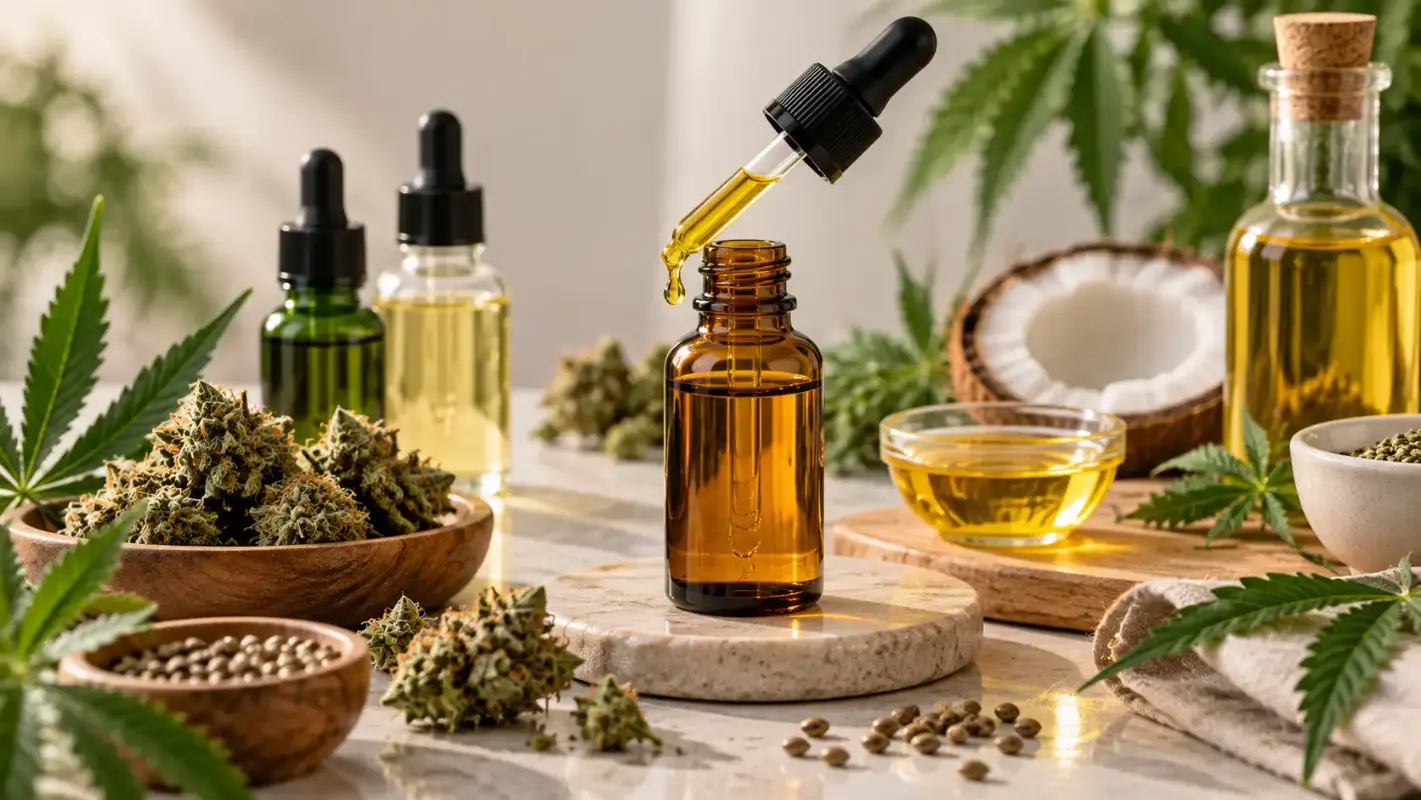
A cannabis tincture is a liquid cannabis extract combined with a liquid base. The base may contain alcohol, glycerin, or a carrier oil. Depending on the formulation, the extract can contain THC, CBD, other cannabinoids, and cannabis compounds.
In simple terms, a weed tincture is cannabis extract in liquid form. However, each cannabis product can differ in its cannabinoids, extract type, and other ingredients. This article breaks down what cannabis tinctures contain, the types available, and how they compare with other cannabis products. Keep reading to understand what sets these formulations apart.
What Is a Cannabis Tincture Made Of?
A cannabis tincture combines cannabis extract with a liquid base and, in some products, additional ingredients. The exact formulation depends on the extract and other components selected by the manufacturer. The sections below explain each part of a typical tincture. A 2025 study examined 18 commercial CBD tinctures sold online in the United States. Twelve samples had CBD concentrations that differed from their labels by more than 10%.
Here are the main components commonly found in cannabis tinctures:
Cannabis Extract
Cannabis extract is the main cannabis component in a tincture. It contains compounds extracted from cannabis plant material, including cannabinoids. Depending on the process used, the extract may also retain terpenes and other naturally occurring compounds.
The extract can vary in composition from one product to another. Some contain a specific cannabinoid, while others retain a broader range of cannabis compounds. This difference helps determine the overall composition of the finished tincture.
Terpenes and Other Naturally Occurring Cannabis Compounds
Cannabis contains terpenes and other naturally occurring plant compounds. Terpenes contribute to the characteristic aromas and flavors associated with different cannabis varieties. Flavonoids are another group of compounds that can occur in cannabis.
The amount of these compounds can vary between cannabis extracts. Processing can also affect the compounds retained in the finished product. Their presence and concentration can therefore differ between tincture formulations.
Alcohol, Glycerin, or Carrier Oils
A tincture also needs a liquid base to create its finished formulation. Common options include alcohol, vegetable glycerin, and carrier oils such as MCT oil.
Alcohol-based tinctures use alcohol as their liquid base. Oil-based tinctures combine cannabis extract with a carrier oil. Glycerin tinctures instead use vegetable glycerin as their primary liquid base.
Flavorings and Other Added Ingredients
Some cannabis tinctures contain ingredients beyond the extract and liquid base. These may include flavorings, sweeteners, or other ingredients used in the formulation. The specific ingredients depend on the product and manufacturer.
The ingredient list can show which additional ingredients appear in the formulation. When comparing tinctures from trusted brands, the cannabinoid information can also provide details about the listed compounds and their stated amounts. Together, these details give a clearer picture of the product.
What Cannabinoids Are Found in Cannabis Tinctures?
Cannabis tinctures can contain one cannabinoid or several, depending on the extract used. THC and CBD are the two best-known cannabinoids found in cannabis, but they are not the only ones. Some tinctures also contain CBG, CBN, CBC, THCV, and other minor cannabinoids.
THC
THC, or delta-9-tetrahydrocannabinol, is one of the primary cannabinoids found in cannabis. It commonly appears as delta-9 THC on cannabis product labels. A THC tincture typically lists THC as its main cannabinoid, although the formulation may contain other cannabinoids as well. The stated THC concentration can also vary between products, so labels provide useful information when comparing tinctures.
CBD
CBD, or cannabidiol, is another major cannabinoid found in cannabis. A CBD tincture generally lists CBD as its primary cannabinoid, although it may also contain THC or other compounds. CBD concentration can vary between products based on the extract and formulation. Some products also identify whether their CBD comes from a full-spectrum, broad-spectrum, or isolate extract.
CBG, CBN, and Other Minor Cannabinoids
Cannabis contains cannabinoids beyond THC and CBD, including CBG, CBN, CBC, and THCV. These compounds generally occur in smaller amounts, although their concentrations can vary between cannabis varieties and extracts. Some manufacturers include specific minor cannabinoids in multi-cannabinoid tinctures. However, not every tincture contains these compounds, so their presence depends on the product's formulation.
Cannabinoid | How it may appear in a tincture |
CBG | Primary or secondary cannabinoid |
CBN | Secondary or minor cannabinoid |
CBC | Minor cannabinoid |
THCV | Minor cannabinoid |
How Cannabinoid Profiles Vary Between Tinctures
A tincture's cannabinoid profile depends on the cannabis extract and the formulation used. Some products are primarily THC-based, while others contain mostly CBD. Other formulations combine THC and CBD or include several minor cannabinoids alongside them. Therefore, the cannabinoid concentration and THC-CBD ratio can differ significantly between products.
When comparing cannabis tinctures, look at the following details on the product label:
- Primary cannabinoid: The main cannabinoid listed in the formulation.
- Cannabinoid concentration: The stated amount of each listed cannabinoid.
- THC-CBD ratio: The relative amounts of THC and CBD.
- Minor cannabinoids: Additional cannabinoids included in the formulation.
- Extract type: Whether the product uses a full-spectrum, broad-spectrum, or isolate extract.
These details show why cannabis tinctures can differ even when they share the same primary cannabinoid. The extract type is another factor that can shape the overall formulation.
What Are the Different Types of Cannabis Tinctures?
Cannabis tinctures can be categorized by their primary cannabinoid, cannabinoid combination, or extract type. Because these categories describe different aspects of a formulation, a single tincture can fit into more than one category.
THC Tinctures
A THC tincture contains THC as its primary listed cannabinoid. The formulation may also contain CBD, CBG, CBN, or other cannabinoids. Therefore, a THC tincture does not necessarily contain THC alone.
The amount of THC can vary between formulations. A THC tincture may also contain CBD or minor cannabinoids, depending on the extract used. Therefore, “THC tincture” identifies the primary cannabinoid without describing every compound in the product.
CBD Tinctures
A CBD tincture contains CBD as its primary listed cannabinoid. It may also include other cannabinoids, depending on the extract used. For example, some CBD tinctures use broader extracts rather than isolated CBD.
The amount of CBD can vary between formulations. A CBD tincture may also contain THC or other cannabinoids, depending on its extract. Therefore, the term “CBD tincture” identifies its primary cannabinoid rather than describing the entire formulation.
THC and CBD Tinctures
Some cannabis tinctures contain both THC and CBD as their main cannabinoids. These products can have different THC-CBD ratios based on their formulation. One tincture may contain similar amounts of both, while another may contain substantially more of one cannabinoid.
Products with similar stated amounts of THC and CBD are sometimes described as balanced tinctures. However, “balanced” does not indicate one fixed ratio across all products. The listed cannabinoid concentrations provide a more precise description of the formulation.
Full-Spectrum Tinctures
A full-spectrum tincture uses an extract designed to retain a broad range of naturally occurring cannabis compounds. These may include major cannabinoids, minor cannabinoids, terpenes, and other plant compounds. Depending on the source material, the extract may also contain THC.
“Full-spectrum” describes the intended composition of the extract, not a fixed list of compounds. Processing can affect the final profile, so products can still differ from one another. A product label or certificate of analysis can provide more specific information about its listed or detected compounds.
Broad-Spectrum Tinctures
A broad-spectrum tincture contains multiple cannabis compounds but is typically processed to remove or greatly reduce THC. It can retain other cannabinoids and compounds found in the original extract. However, the exact composition can vary between products.
Broad-spectrum does not describe one fixed cannabinoid profile. Products can therefore differ in which cannabinoids and other compounds remain after processing. Testing information can provide more specific details about the finished extract.
Isolate Tinctures
An isolate tincture uses an isolated cannabinoid as its primary cannabis extract. CBD isolate is one common example, although other cannabinoids can also be isolated. Compared with broader extracts, an isolate has a more limited cannabinoid profile.
A tincture made with CBD isolate can contain CBD without the wider range of cannabinoids found in a full-spectrum extract. However, the finished tincture can still contain a carrier oil, glycerin, flavorings, or other ingredients. The term therefore describes the cannabis extract rather than the complete finished product.
With several types of cannabis tinctures available, comparing products can help you find a formulation that fits your preferences. Levels also feature deals on cannabis products, with availability and offers varying by location.
How Do Cannabis Tinctures Compare with Other Cannabis Products?
Cannabis tinctures are liquid formulations made from cannabis extracts.Other cannabis products include edibles, oils, vapes, and flower. The main differences involve the product format, ingredients, and how the cannabis extract is formulated.
Tinctures vs. Edibles
Tinctures and edibles can both contain cannabis extracts, but they use different product formats and bases. A tincture is a liquid formulation, while an edible contains cannabis extract in a food or beverage.
The table below highlights the main differences.
Feature | Cannabis tincture | Cannabis edible |
Form | Liquid | Food or beverage |
Cannabis component | Cannabis extract | Cannabis extract |
Common base | Alcohol, glycerin, or carrier oil | Food or beverage ingredients |
Examples | Liquid tincture | Gummies, chocolates, infused drinks |
Tinctures vs. Cannabis Oil and CBD Oil
The terms tincture and cannabis oil can overlap, especially when a tincture uses an oil-based carrier. However, “tincture” describes a liquid cannabis formulation, while “cannabis oil” generally refers to cannabis extract formulated in oil. CBD oil is a type of oil-based product centered on CBD.
Because these terms can overlap, the product name alone may not explain the complete formulation. The ingredient list and cannabinoid information provide more useful details when comparing these products.
Tinctures vs. Vapes
Tinctures and vape products can both contain cannabis extracts, but they are different product formulations. A tincture is prepared as a liquid product with a suitable base. Vape products use cannabis extracts or oils formulated for use with vaporizing devices.
The distinction also extends to their physical format and ingredients. A tincture may contain alcohol, glycerin, or a carrier oil. A vape product instead uses a formulation designed for its specific device and delivery format.
Tinctures vs. Cannabis Flower
Cannabis tinctures and flower differ in both form and composition. Cannabis flower is the dried plant material, while a tincture contains cannabis extract combined with a liquid base. As a result, a tincture does not contain cannabis flower in its original physical form.
The two products also differ in how their cannabis components are presented. Flower contains the original plant material, while a tincture contains compounds from cannabis extract within a liquid formulation.
If you want to learn more about the plant material itself, our guide on What Is Cannabis Flower? A Beginner's Guide explains what cannabis flower is, how it differs from extracts, and the terminology commonly used to describe it. This can help provide more context when comparing flower with liquid cannabis products such as tinctures.
The Bottom Line
A cannabis tincture is a liquid cannabis formulation, but the term alone does not describe every aspect of the product. The specific extract, ingredients, and cannabinoid profile determine what the finished formulation contains.
When evaluating a tincture, the product label and available testing information can provide more detail than the product name alone. If you're looking for cannabis products in Michigan, you can find a local Levels dispensary to explore what's available in your area.
Frequently Asked Questions (FAQs)
Are Cannabis Tinctures Made with Alcohol?
Not always. Some tinctures use alcohol as their liquid base, while others use carrier oils or vegetable glycerin. The ingredient list identifies the base used in a specific product.
Do Cannabis Tinctures Contain Terpenes?
They can, depending on the extract and processing method. Some formulations retain terpenes from the original cannabis extract, while others may contain fewer or no detectable terpenes.
How Are Cannabis Tinctures Made?
Manufacturers create cannabis tinctures by combining cannabis extract with a liquid base and, depending on the formulation, other ingredients. The extraction and formulation processes can vary between manufacturers.
What Is the Difference Between a Tincture and Cannabis Oil?
The terms can overlap. A tincture generally describes a liquid cannabis formulation, while cannabis oil refers to cannabis extract formulated in oil. An oil-based tincture can therefore fit both descriptions.
References:
- Food and Drug Administration. (2023, January 19). What you need to know (and what we're working to find out) about products containing cannabis or cannabis-derived compounds, including CBD. U.S. Department of Health and Human Services. https://www.fda.gov/consumers/consumer-updates/what-you-need-know-and-what-were-working-find-out-about-products-containing-cannabis-or-cannabis
- Food and Drug Administration. (2026). FDA and cannabis: Research and drug approval process. U.S. Department of Health and Human Services. https://www.fda.gov/news-events/public-health-focus/fda-and-cannabis-research-and-drug-approval-process
- Food and Drug Administration. (2024, July 16). FDA regulation of cannabis and cannabis-derived products, including cannabidiol (CBD). U.S. Department of Health and Human Services. https://www.fda.gov/news-events/public-health-focus/fda-regulation-cannabis-and-cannabis-derived-products-including-cannabidiol-cbd
- Patel, P., Turner, A. R., & Nimmana, B. K. (2026). Cannabis (marijuana) overview. In StatPearls. StatPearls Publishing. https://www.ncbi.nlm.nih.gov/books/NBK430801/
- National Academies of Sciences, Engineering, and Medicine. (2017). The health effects of cannabis and cannabinoids: The current state of evidence and recommendations for research. National Academies Press. https://www.ncbi.nlm.nih.gov/books/NBK423845/
- Sullivan, Z., Lapierre, C., Erlandson, L. W., & Pham, L. (2025). Substances of health concern: Label accuracy of cannabidiol and tetrahydrocannabinol in commercial cannabidiol tinctures from the United States. Cannabis and Cannabinoid Research. PubMed record