How do you want to shop?
How Much CBD Should You Start With?

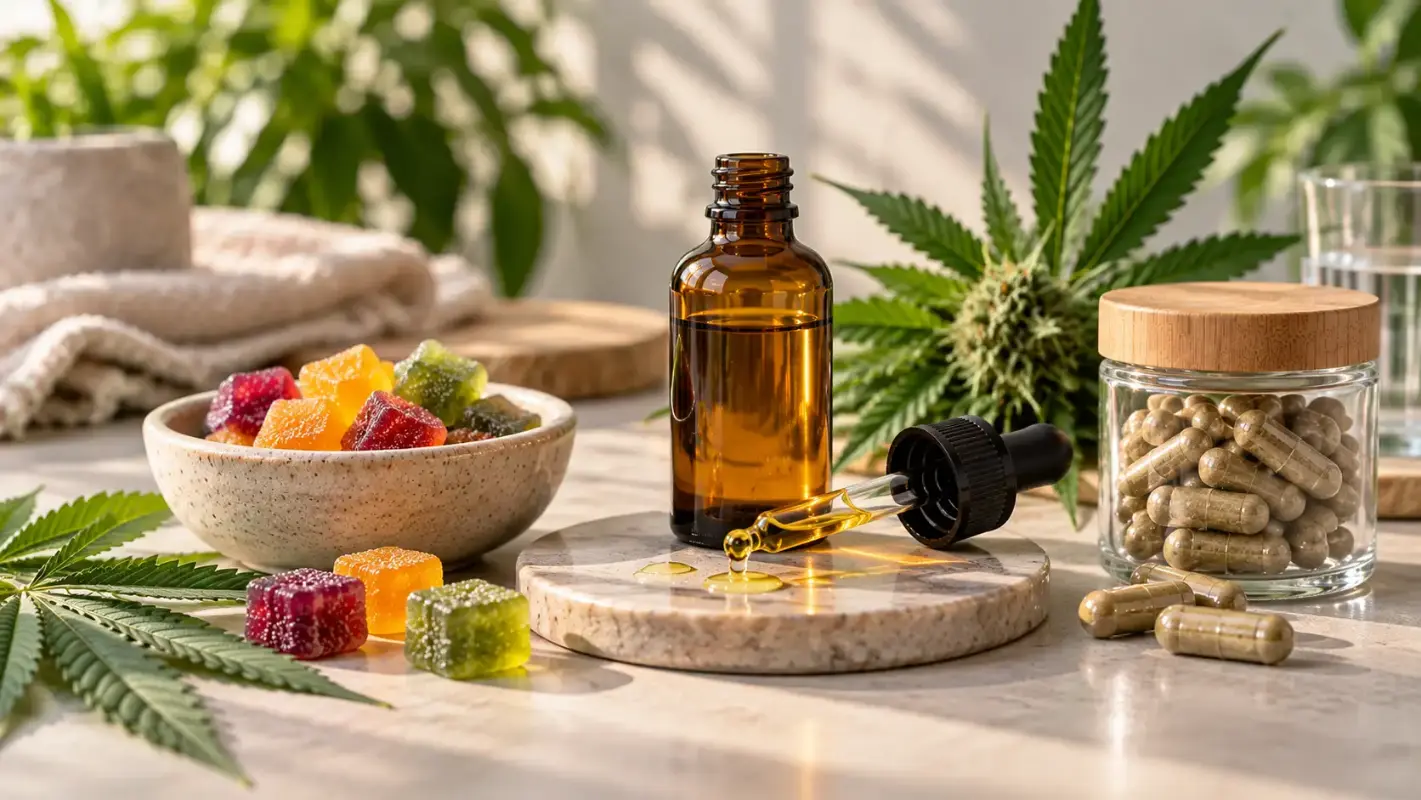
If you're new to CBD, 5–10 mg is a cautious starting range for many adults. However, there is no single CBD dose that works for everyone. Individual sensitivity, product strength, formulation, and how CBD is taken can all affect how a person responds.
The amount you start with also depends on the type of CBD product you choose. Oils, tinctures, gummies, and capsules can provide different amounts per serving, so understanding the label is important when deciding how much CBD you are taking.
This guide explains what can affect your CBD dose, how to adjust it gradually, and how to compare the amounts found in common CBD products.
What Determines Your CBD Dose?
For many adults, 5–10 mg can be considered a cautious starting range for an oral CBD product. According to Healthline, CBD dosage can vary based on factors such as body weight, body chemistry, and the concentration of CBD in a product.
Several factors can affect how a CBD dose is interpreted, including individual differences, product potency, and consumption methods. These factors can help explain why the same CBD amount may not produce the same response in every situation.
Factor | What to Consider |
Body weight and sensitivity | Body weight alone does not determine a CBD dose. Individual response can also vary. |
CBD product potency | Strength can differ by total CBD, serving size, and concentration. |
Consumption method | Different formats can use different serving sizes and measurements. |
Body Weight and Individual Sensitivity
Body weight is sometimes used in CBD research, particularly when researchers express amounts in milligrams per kilogram. However, this does not establish a simple weight-based formula for choosing an over-the-counter CBD dose.
Individual differences can also affect how CBD is absorbed and processed. For beginners, the product's labeled CBD amount and serving size provide a more practical reference than relying on body weight alone.
CBD Product Potency
CBD potency describes how much CBD a product contains at a specific concentration or serving size. A product label may list the total CBD in the package, the amount per serving, or the CBD concentration per mL. Therefore, two products with similar package sizes can still contain very different amounts of CBD.
When checking CBD potency, look for these details on the product label:
- Total CBD: The combined amount of CBD in the entire package.
- CBD per serving: The amount listed for one labeled serving.
- CBD per dropper: Commonly used for CBD oils and tinctures.
- CBD concentration per mL: Useful for comparing liquid products with different strengths.
Consumption Method
The way you take CBD can affect how much you consume in a single serving and how the product's dose is measured. Oils and tinctures may allow you to measure CBD by mL or dropper, while gummies and capsules usually provide a fixed amount per piece. Edibles may also contain different amounts of CBD depending on the product and serving size.
For beginners, the labeled amount per serving is the most useful starting point. Check how much CBD is provided in the specific amount you plan to take, rather than comparing products by package size alone. This makes it easier to understand how much CBD you are actually consuming and compare different product formats.
If you're comparing CBD products by strength, format, or serving size, it can also help to check current product deals before choosing an option. Levels offer rotating deals and promotions at participating Michigan dispensaries, giving you another way to compare available products and pricing.
How Should You Increase Your CBD Dose?
If you decide to adjust your CBD dose, make changes gradually rather than making a large increase. Keeping the amount and timing consistent between adjustments can make it easier to understand how you respond to the product. Choosing quality cannabis products with clear serving information can also make it easier to track how much CBD you are taking.
When to Increase Your Dose
Do not increase your CBD dose simply because you do not notice an immediate response. CBD absorption and onset can vary depending on the product and how it is taken. Give the product enough time to take effect before deciding whether an adjustment is appropriate.
Before making an adjustment, check the product's serving instructions and consider how much CBD you have already taken. If the manufacturer provides specific directions for adjusting the serving, follow those instructions.
How Much to Increase
There is no standard increase that applies to every CBD product. If you decide to adjust your amount, make a small, clearly measurable change and give yourself time to evaluate how you respond.
Avoid treating another person's CBD amount as a formula for your own use. Follow the product's serving instructions and change one factor at a time so you can keep track of how much CBD you are taking.
When to Stop Increasing
A higher CBD amount is not automatically better. Stop increasing the amount if you experience unwanted effects or reach the product's labeled serving instructions. If the product does not provide clear guidance for adjusting the amount, avoid making a large increase based only on another person's experience.
How Much CBD Is in Common Products?
CBD products come in different strengths, so the amount of CBD can vary by format, concentration, and serving size. Oils and tinctures may list CBD per mL or dropper, while gummies and capsules usually provide an amount per piece. When comparing popular brands, check how each product lists its CBD amount so you can compare serving sizes more accurately.
An FDA survey of commercially available CBD products found that labeled CBD amounts varied considerably across products. The survey included products with labeled CBD amounts ranging from 25 mg to 500 mg, illustrating the range of CBD amounts that can appear on product labels.
Product Type | How CBD Is Commonly Listed |
CBD Oils and Tinctures | CBD per mL, per dropper, or total CBD |
CBD Gummies and Edibles | CBD per piece or per serving |
CBD Capsules | CBD per capsule or per serving |
How Much CBD Is in Oils and Tinctures?
CBD oils and tinctures can come in different concentrations. Their labels may show the total CBD in the bottle, the amount per mL, or the amount provided by a specific serving volume.
For example, a bottle containing 600 mg of CBD in 30 mL contains 20 mg of CBD per mL. However, the amount provided by a dropper depends on the volume defined by the product's serving instructions. Always use the labeled serving volume when determining how much CBD a serving contains.
How Much CBD Is in Gummies and Edibles?
CBD gummies usually list the amount of CBD per piece, while the package may also specify how many pieces make up one serving. For example, one gummy might contain 10 mg of CBD, while another contains 25 mg.
Other CBD edibles can vary in both size and concentration. Check the label for the amount of CBD per piece or serving rather than relying on the product's size alone.
How Much CBD Is in CBD Capsules?
CBD capsules generally provide a fixed amount of CBD per capsule. The package may also state the total CBD contained in the entire bottle.
When comparing capsules, distinguish between the amount in one capsule and the total amount in the package. The per-capsule amount is the more useful figure when determining how much CBD one serving provides.
Does CBD Type Affect Your Dose?
Full-spectrum, broad-spectrum, and CBD isolate products differ in their cannabinoid composition. These differences do not create a universal dosing formula, but they can affect how you interpret the cannabinoid profile of different cannabis products.
Does Full-Spectrum CBD Change the Dose?
Full-spectrum CBD contains CBD along with other naturally occurring cannabis compounds. Depending on the product, this can include THC. When comparing full-spectrum products, consider the broader cannabinoid profile alongside the stated CBD amount, particularly if THC content is important to you.
Does Broad-Spectrum CBD Change the Dose?
Broad-spectrum CBD contains CBD and other cannabis compounds, with THC intended to be removed during processing. However, the exact cannabinoid profile can vary between products.
Independent laboratory results can provide additional information about the cannabinoids actually detected in a specific product.
Does CBD Isolate Change the Dose?
CBD isolate is centered on isolated cannabidiol rather than a broader mixture of cannabinoids. This gives it a different composition from full-spectrum and broad-spectrum products. When comparing CBD isolate products, focus on the stated CBD amount per serving and the product's laboratory information when available.
For a broader look at cannabis flower, read What Is Cannabis Flower? A Beginner's Guide to learn more about flower, its characteristics, and how it differs from other cannabis products.
What Are the Possible Side Effects of CBD?
CBD may cause unwanted effects, although individual responses can vary. The National Center for Complementary and Integrative Health (NCCIH) also notes that CBD can interact with certain medications.
Some reported effects include:
- Drowsiness or somnolence
- Diarrhea or other gastrointestinal symptoms
- Changes in appetite
- Elevated liver enzymes
CBD can also interact with certain medications. If you take prescription medication, discuss potential interactions with a qualified healthcare professional before using CBD.
If you're interested in other cannabis product formats, read What Is an Infused Pre-Roll? A Complete Guide to learn how infused pre-rolls are made, what they contain, and how they differ from traditional pre-rolls.
How Do You Choose a CBD Product?
Choosing a CBD product involves more than comparing the number of milligrams on the front of the package. Look for clear information about CBD potency, serving size, cannabinoid content, and independent testing.
- Clear CBD potency and serving information: Check the total CBD and the amount provided per serving.
- Third-party laboratory testing: Independent testing can provide information about cannabinoid content and potential contaminants.
- Certificate of Analysis (COA): A COA can show laboratory results for a specific product or batch.
- Cannabinoid profile: Check whether the product is full-spectrum, broad-spectrum, or CBD isolate.
- THC content: Review the stated THC amount rather than assuming the product contains none.
Product testing also shows why it is important to pay attention to product labeling. A 2024 study analyzed 202 commercially available CBD products and found that 74% differed from their labeled CBD potency by at least 10%. Of those products, 46% contained more CBD than the label indicated, while 28% contained less. The study included tinctures, gummies, vapes, and topicals.
A clear label and accessible laboratory results can therefore provide more information when comparing CBD products.
Bottom Line: Start Low and Adjust Slowly
For many adults, 5–10 mg is a cautious starting range to consider with an oral CBD product. However, this should not be treated as a universal dose.
If you decide to adjust your amount, make changes gradually and keep track of the CBD per serving. Also consider the product's concentration, cannabinoid profile, and available laboratory testing.
The goal is not to find one number that works for everyone. It is to understand how much CBD a specific product provides and make informed comparisons. If you're looking for CBD products in Michigan, find a local Levels dispensary near you to explore available options and compare product information.
Frequently Asked Questions (FAQs)
Is 5 mg of CBD Enough for a Beginner?
Five milligrams is a low amount to consider when starting with CBD. However, there is no universal starting dose for every person or product. Check the product's serving information and consider how much CBD is provided in each serving.
Is 10 mg of CBD a Good Starting Dose?
Ten milligrams falls within the cautious starting range discussed in this guide for many adults using an oral CBD product. However, individual response can vary, so it should not be treated as a universal dose. Check the product's serving instructions before deciding how much to take.
Can Beginners Take 20 mg of CBD?
Twenty milligrams has also been studied in humans, but a higher amount is not automatically more appropriate for a beginner. Consider the product's serving instructions, formulation, and your individual response before increasing the amount.
How Much CBD Should I Take for the First Time?
For many adults, 5–10 mg can be considered a cautious starting range for an oral CBD product. The product's serving size and CBD concentration can help you determine how that amount translates to the specific product you're using.
How Often Should a Beginner Take CBD?
There is no single schedule that applies to every CBD product. Frequency can depend on the product's formulation, route, and serving instructions. Follow the directions provided for the specific product rather than copying another person's routine.
How Long Does CBD Stay in Your System?
CBD does not have one fixed timeframe for how long it remains in the body. Its pharmacokinetics can vary with dose, route, formulation, and other factors.
Does CBD Have THC in It?
It depends on the product type. Full-spectrum CBD products can contain THC, while broad-spectrum products are formulated to remove THC. CBD isolate contains isolated cannabidiol. Product testing can provide more information about the actual cannabinoid profile.
What Should I Look for on a CBD Label?
Look for the total CBD amount, CBD per serving, serving size, cannabinoid type, and THC content. Third-party testing and a Certificate of Analysis can provide additional information about the product's cannabinoid content and quality.
References
- Bhaskar, A., Bell, A., Boivin, M., Briceno, N., Hadley, C., Harris, M., Hsu, C., MacCallum, C., & others. (2021). Consensus recommendations on dosing and administration of medical cannabis to treat chronic pain: Results of a modified Delphi process. Journal of Cannabis Research, 3, 22. https://doi.org/10.1186/s42238-021-00073-1
- Ferguson, S. (2025, September 9). CBD dosage: How much should you take? Healthline. https://www.healthline.com/health/cbd-dosage
- Gidal, B. E., Vandrey, R., Wallin, C., Callan, S., Sutton, A., Saurer, T. B., & Triemstra, J. L. (2024). Product labeling accuracy and contamination analysis of commercially available cannabidiol product samples. Frontiers in Pharmacology, 15, 1335441. https://doi.org/10.3389/fphar.2024.1335441
- National Center for Complementary and Integrative Health. (n.d.). Cannabis (marijuana) and cannabinoids: What you need to know. National Institutes of Health. https://www.nccih.nih.gov/health/cannabis-marijuana-and-cannabinoids-what-you-need-to-know
- U.S. Food and Drug Administration. (2019). Content vs. label claim: A survey of CBD content in commercially available products. https://www.fda.gov/media/128364/download