
How do you want to shop?
How to Make Cannabutter: Complete Cannabis Butter Recipe Guide

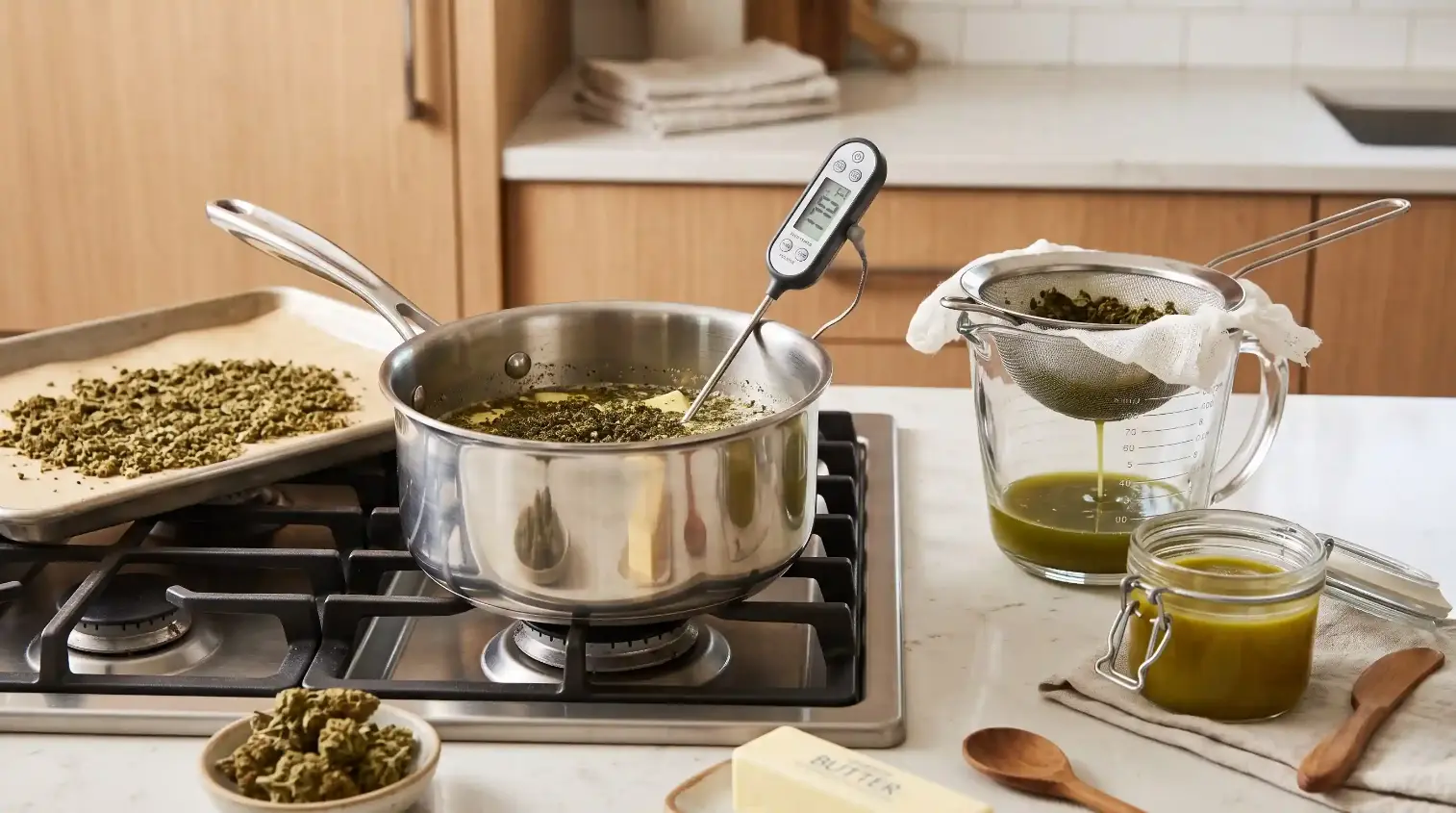
Cannabutter is butter infused with cannabis after the flower has been decarboxylated. The process involves preparing the cannabis, heating it, and infusing it into butter. The mixture is then strained, cooled, and stored for later use in recipes. Because homemade cannabutter is not lab tested, its final THC content remains an estimate.
Making cannabutter requires careful preparation and temperature control. Homemade potency can also vary based on the cannabis product and infusion process. This guide covers the key steps, from decarboxylation and infusion to straining, storage, and potency estimation.
What You Need to Make Cannabutter
The ingredients and equipment you use can affect the infusion process. Butter provides the fat needed for the infusion, while water can help reduce the risk of scorching. You will also need basic tools for heating, grinding, straining, and storing the finished butter.
Potency is also worth considering before you begin. A 2025 study tested 277 cannabis products from 52 Colorado dispensaries and found that 56.7% of flower samples were within 15% of their labeled THC content.
The study examined retail cannabis products, not homemade cannabutter. However, it shows why a product's stated THC percentage should not be treated as an exact measurement. When selecting cannabis flower, checking the label from a trusted cannabis brands can provide a starting point for estimating THC content, but the final potency of homemade cannabutter will still vary.
Ingredients
Unsalted butter is the main fat used in a traditional cannabutter recipe. Cannabis flower provides the cannabinoids that transfer into the butter during infusion. Some methods also add water to help reduce the risk of scorching during heating.
- Cannabis flower or cannabis buds
- Unsalted butter
- Water
- Optional clarified butter
Equipment
You can make cannabutter with standard kitchen equipment. A baking sheet helps with decarboxylation, while a saucepan works for stovetop infusion. A thermometer also helps you monitor the cooking temperature during the process.
- Baking sheet
- Parchment paper
- Saucepan
- Wooden spoon
- Grinder
- Kitchen thermometer
- Fine mesh strainer
- Cheesecloth
- Airtight container
How to Decarboxylate Cannabis for Cannabutter
Decarboxylation heats cannabis to convert THCA into THC before infusion. Different methods use different temperatures and heating times, so follow one method consistently.
Prepare the Cannabis
Break the cannabis flower into smaller pieces without grinding it into a fine powder. Spread the pieces across a parchment-lined baking sheet in a single layer for more even heating. If your selected method calls for covering the cannabis, follow those instructions.
Heat the Cannabis
Place the prepared cannabis in an oven and heat it according to the selected decarboxylation method. Common methods use temperatures around 220°F to 245°F, with heating times that vary by temperature and preparation.
Choose one method and keep its temperature and timing consistent. Avoid combining instructions from different methods, as this can lead to unnecessary heating.
Cool and Grind the Cannabis
Remove the cannabis from the oven and let it cool before grinding. Once cool, use a grinder to create a medium grind. Avoid turning the flower into a fine powder because smaller particles can make straining more difficult.
Because the starting flower affects any THC potency estimate, product selection is an important part of the process. Levels offer cannabis deals across different products and locations, with available offers changing over time.
How to Make Cannabutter Step by Step
The infusion stage transfers cannabinoids from the prepared cannabis into the butter. Keep the heat controlled throughout the process and follow the temperature and timing for your selected method.
Combine the Ingredients
Place the decarboxylated cannabis, unsalted butter, and water in a saucepan. Water can help reduce the risk of scorching during the infusion. Keep the cannabis covered by the butter mixture as it heats. Stir the ingredients to distribute the cannabis throughout the mixture, then begin the infusion over low heat.
Infuse the Butter Over Low Heat
Keep the mixture over low heat for the duration of your selected infusion method. One method uses about 45 minutes to 1 hour, while other methods take longer. Stir at intervals to keep the mixture evenly distributed. Avoid high heat and monitor the temperature throughout the infusion.
Monitor the Temperature and Cooking Time
Use a kitchen thermometer to monitor the infusion temperature. The shorter stovetop method reviewed for this guide keeps the mixture below 190°F, while other methods use lower temperatures for longer periods.
Keep the temperature steady throughout the infusion unless the selected recipe calls for an adjustment.
Cool the Finished Butter
Remove the infused butter from the heat once the infusion time ends. Let it cool slightly before straining, but keep it warm enough to pass through the filter.
How to Strain Cannabutter
Straining separates the infused butter from the cannabis plant material left after infusion. Removing the plant matter helps create a smoother finished butter and makes it easier to use in recipes. The butter should still be warm enough to flow through the filter but not so hot that it is difficult to handle.
Place a fine mesh strainer or cheesecloth over a clean, heat-safe container. Slowly pour the infused butter through the filter and allow it to drain naturally. Avoid pressing or squeezing the plant material, as this can push more fine particles into the finished butter. Once strained, check the butter for any remaining plant material and filter it again if needed.
After straining, allow the butter to cool before transferring it to an airtight container for storage. If water was included during the infusion, the butter may separate from the water as it cools, allowing the solidified butter to be removed from the liquid.
How to Store Cannabutter
Store cannabutter in a clean, airtight container after straining and cooling. Protect it from heat, moisture, and excess air to help maintain its quality. Label the container with its contents and preparation date for easy identification.
Refrigerating Cannabutter
Refrigeration is a practical option for short-term storage. Keep the cannabutter sealed in an airtight container and consistently refrigerated.
If water was used during infusion, separate the solidified butter from the remaining water before storage. Storage times vary based on preparation and storage conditions, so use the timeframe recommended for your method.
Freezing Cannabutter
Freezing can extend storage when you do not plan to use the butter soon. Place the cannabutter in an airtight, freezer-safe container to protect it from air and freezer odors. Dividing it into smaller portions can also make it easier to store and thaw only what you need.
How Strong Is Homemade Cannabutter?
Homemade cannabutter does not have a guaranteed THC concentration. Its final potency depends on the starting cannabis, processing, and amount of finished butter. A calculation can estimate the theoretical THC content, but only laboratory testing can confirm the actual concentration.
What Affects Cannabutter Potency?
Several factors can affect the estimated THC concentration of cannabis butter, including the starting potency, amount of cannabis, processing, straining, and final butter yield.
Factor | Effect on Estimated Potency |
Cannabis potency | Higher starting THC content increases the theoretical THC amount. |
Amount of cannabis | More cannabis increases the total potential THC. |
Decarboxylation | Converts THCA into THC before the infusion. |
Infusion process | Heat and cooking time can affect cannabinoid transfer. |
Straining | Some infused butter may remain with the plant material. |
Final butter yield | More butter distributes the estimated THC across a larger amount. |
How to Estimate THC Content
According to Epicurious, you can estimate the theoretical THC content by multiplying the cannabis weight by its THC percentage. For example, 1 gram of cannabis at 20% THC contains a theoretical 200 milligrams of THC. This is the starting amount before accounting for processing losses.
Calculation | Example |
Cannabis used | 1 gram |
Stated THC content | 20% |
Theoretical THC | 200 mg |
Processing losses | Not known |
Final THC content | Estimated, not confirmed |
The theoretical amount does not equal the confirmed THC content of the finished cannabutter. Processing can affect the final amount, so the calculation should be treated as an estimate.
Cooking and Baking with Cannabutter
Cannabutter can replace regular butter in recipes that already call for butter as an ingredient. It can be used in both sweet and savory dishes, although its herbal flavor may be more noticeable in some recipes. Here are some common ways to incorporate cannabutter into cooking and baking.
Baking With Cannabutter
Cannabutter can be incorporated into recipes such as brownies, cookies, cakes, muffins, and scones. It works well in recipes that already call for butter or another fat. When making a direct substitution, keep the total butter amount consistent with the original recipe.
Using Cannabutter in Savory Recipes
Cannabutter can also work in savory recipes that already contain butter. Possible applications include sauces, vegetables, and other dishes that use butter as part of the recipe. Consider how the infused butter fits with the other ingredients, as its herbal flavor may be more noticeable in simpler dishes.
The flavor of cannabis flower can also vary based on its terpene profile. Read What Are Terpenes? A Beginner's Guide to learn more about these aromatic compounds and their role in cannabis.
Common Cannabutter Mistakes to Avoid
Small process errors can affect the consistency of homemade cannabutter. The main issues involve preparation, temperature control, straining, and storage.
- Using excessive heat: Excessive heat can affect the infusion, so use the temperature specified by your method.
- Grinding too finely: Use a medium grind to make straining easier.
- Skipping decarboxylation: The cannabis should undergo this step before infusion.
- Boiling the mixture: Maintain a gentle simmer instead of a rolling boil.
- Skipping the straining step: Remove the plant material before storing the butter.
- Using poor storage: Keep the finished butter in an airtight container.
- Ignoring the final yield: The amount of finished butter affects any potency estimate.
The Bottom Line:Make Cannabutter with the Right Heat, Time, and Storage
Making cannabutter comes down to keeping the process consistent from preparation through storage. Decarboxylation, controlled heating, proper straining, and suitable storage all contribute to the quality of the finished butter. Because homemade cannabutter is not laboratory tested, its final THC content should always be treated as an estimate.
Following one method from start to finish can help avoid inconsistencies caused by mixing different temperatures, cooking times, or preparation techniques. Pay attention to the final butter yield as well, since it affects any estimate of THC concentration. For more cannabis education and product information, visit Levels to find a licensed dispensary near you.
Frequently Asked Questions (FAQs)
Can you make cannabutter without water?
Yes. Some cannabutter methods use only butter and cannabis, while others add water during the infusion. Water can help reduce the risk of scorching, but it is not required for every method.
Why does cannabutter potency vary?
Potency can vary because of differences in the starting cannabis, processing, straining, and final butter yield. These factors make homemade THC calculations estimates rather than confirmed measurements.
Does longer infusion make cannabutter stronger?
Not necessarily. Longer infusion times can change how much plant material and flavor transfer into the butter, but more cooking time does not automatically mean a higher THC concentration.
How long does homemade cannabutter last?
Storage life depends on the preparation and storage conditions. Refrigeration is suitable for shorter-term storage, while freezing can extend storage when needed. Use a clean, airtight container and follow the storage timeframe associated with your recipe.
References:
- Aggrey, M. G., & Denenberg, Z. (2023, March 21). How to make cannabutter, step-by-step. Bon Appétit. https://www.bonappetit.com/story/how-to-make-cannabutter
- Citti, C., Ciccarella, G., Braghiroli, D., Parenti, C., Vandelli, M. A., & Cannazza, G. (2016). Pharmaceutical and biomedical analysis of cannabinoids: A critical review. Journal of Pharmaceutical and Biomedical Analysis, 147, 565–579.
- Giordano, G., Brook, C. P., Ortiz Torres, M., MacDonald, G., Skrzynski, C. J., Lisano, J. K., Mackie, D. I., & Bidwell, L. C. (2025). Accuracy of labeled THC potency across flower and concentrate cannabis products. Scientific Reports, 15, 20822. https://doi.org/10.1038/s41598-025-03854-3
- Lanz, C., Mattsson, J., & Riba, J. (2021). Processing and extraction methods of medicinal cannabis: A narrative review. Cannabis and Cannabinoid Research, 6(5), 381–392. https://doi.org/10.1089/can.2020.0091
- Lavorato, V. (2023, April 8). How to make cannabutter, according to an expert on edibles. Food52. https://food52.com/blog/28261-how-to-make-cannabutter
- Namdar, D., Voet, H., Ajjampura, V., Veksler, I., Sikron-Persi, N., Berman, P., & Gorelick, J. (2019). Terpene profile and cannabinoid content of medical cannabis. Cannabis and Cannabinoid Research, 4(1), 1–8.
- Nahar, L., Uddin, S. J., Alam, M. A., Sarker, S. D., & others. (2022). Postharvest operations of cannabis and their effect on cannabinoid content: A review. Plants, 11(17), 2233. https://doi.org/10.3390/plants11172233
- Pacifici, R., Marchei, E., Salvatore, F., Guandalini, L., Busardò, F. P., & Pichini, S. (2017). Evaluation of cannabinoids concentration and stability in herbal cannabis. Forensic Science International, 273, 1–8.
- Vaculin, K. (2021, March 21). It’s high time you knew how to make cannabutter. Epicurious. https://www.epicurious.com/expert-advice/how-to-make-cannabutter-article
- Zamengo, L., Bettin, C., Badocco, D., Di Marco, V., & Marton, D. (2020). Cannabis storage conditions and their influence on cannabinoid stability. Forensic Science International, 309, 110213.